
Tech Insights: 5G and Beyond — How Ultra-Low Latency Will Change Apps
Introduction
The rollout of 5G networks marks more than just faster mobile internet — it’s the foundation for the next generation of connected applications.
From real-time gaming and augmented reality to autonomous vehicles and remote surgery, 5G’s defining advantage isn’t just speed — it’s ultra-low latency.
As we move toward 5G Advanced and 6G, latency improvements will reshape how developers architect, optimize, and deliver digital experiences.
This post explores how ultra-low latency will change application design, development, and user expectations across industries.
Understanding Latency in Networks
Latency is the time delay between sending a request and receiving a response.
In networking terms, it’s measured in milliseconds (ms) — and even small reductions can have huge effects on user experience.
| Network Type | Average Latency | Example Experience |
|---|---|---|
| 3G | ~100–500 ms | Noticeable lag in video calls |
| 4G LTE | ~30–50 ms | Smooth browsing, mild gaming delay |
| 5G | 1–10 ms | Real-time interactions and instant feedback |
| 6G (Projected) | <1 ms | Practically instantaneous response |
When latency drops below human perceptible thresholds (~10 ms), apps begin to feel truly “live” — eliminating the sense of delay between user input and response.
Why 5G Latency Matters More Than Speed
While 5G offers up to 100× faster data rates, the real game-changer is latency.
Ultra-low latency enables entirely new categories of applications that simply weren’t feasible before.
- Faster speed = quicker downloads.
- Lower latency = instant interaction.
In other words:
Bandwidth improves throughput; latency improves responsiveness.
For developers, that means rethinking how apps synchronize data, render visuals, and communicate with servers.
Real-World Applications Enabled by Ultra-Low Latency
Real-Time Cloud Gaming
With latency under 10 ms, players can stream high-end games from the cloud without lag — no console or GPU needed.
Platforms like NVIDIA GeForce NOW and Xbox Cloud Gaming are already leveraging 5G edge infrastructure to deliver smooth gameplay even on mobile.
AI at the Edge
5G enables AI inference at the network edge, reducing the need to send data to centralized clouds.
Use cases include:
- Smart cameras detecting objects locally.
- Drones making autonomous navigation decisions in milliseconds.
- Industrial IoT devices analyzing sensor data in real time.
This results in faster decision-making, improved privacy, and reduced bandwidth costs.
Augmented and Virtual Reality (AR/VR)
Immersive experiences demand millisecond-level latency — even slight delays can cause motion sickness or input lag.
5G allows AR/VR headsets to offload heavy rendering tasks to nearby edge servers.
This means:
- Lighter, cheaper headsets.
- Seamless shared AR experiences.
- Real-time collaboration in virtual environments.
Autonomous Vehicles
Self-driving cars rely on constant data exchange with other vehicles, road sensors, and traffic systems.
Ultra-low latency networks enable:
- Vehicle-to-Everything (V2X) communication.
- Instant hazard detection and route optimization.
- Coordinated fleet movement in logistics and transport.
Even a delay of 50 ms could mean several meters of travel at highway speeds — making latency reduction a matter of safety, not just speed.
Remote Healthcare and Robotics
In telemedicine or robotic surgery, latency can mean the difference between precision and error.
5G’s sub-10 ms response time allows doctors to control surgical instruments remotely with real-time tactile feedback.
It also enables continuous monitoring of wearable health devices and real-time alerts to physicians.
Developer Implications: Rethinking App Design
Ultra-low latency changes not only what you can build, but how you build it.
1. Shift Toward Edge Computing
Deploy compute workloads closer to users (AWS Wavelength, Azure Edge Zones, Google Distributed Cloud).
This reduces round-trip time between devices and servers.
2. Real-Time Event Streaming
Architect applications around event-driven models — using WebSockets, MQTT, or gRPC streams for instant updates.
3. Client-Side Optimization
Faster networks mean users expect seamless rendering and animations — lazy loading and efficient front-end state management become critical.
4. Data Synchronization Models
Design systems for continuous sync rather than periodic polling — since 5G allows near-instant consistency between client and server.
The Road to 6G
While 5G is still expanding globally, 6G is already on the horizon — promising latency below 1 ms, higher frequency bands (terahertz range), and intelligent network orchestration via AI.
This next leap will support applications like:
- Holographic communication.
- Brain–computer interfaces (BCIs).
- Fully autonomous city infrastructure.
In short, 6G will blur the line between physical and digital experiences.
Challenges Ahead
Despite its potential, 5G adoption still faces hurdles:
- Limited availability in rural or developing regions.
- Device compatibility and battery optimization.
- Network slicing complexity for multi-tenant architectures.
- Privacy and data sovereignty concerns with edge AI.
To fully harness 5G’s power, developers must design with latency-awareness, distributed data, and resilience in mind.
Conclusion
5G — and the ultra-low latency it brings — represents a paradigm shift for software.
We’re entering an era where apps no longer wait for data; they react instantly to it.
From gaming to healthcare to autonomous systems, the developers who design for real-time responsiveness will define the next generation of digital experiences.
References
Comments
Add Your Comment
Related Posts
CES 2026: What Actually Mattered (And What It Tells Us About the Next Tech Cycle)?
0 49
Tech Insights: AI Agents in Production – From Chatbots to Autonomous Workflows
0 51
Tech Insights: Generative AI in the Enterprise – Real Use Cases & Architecture
0 67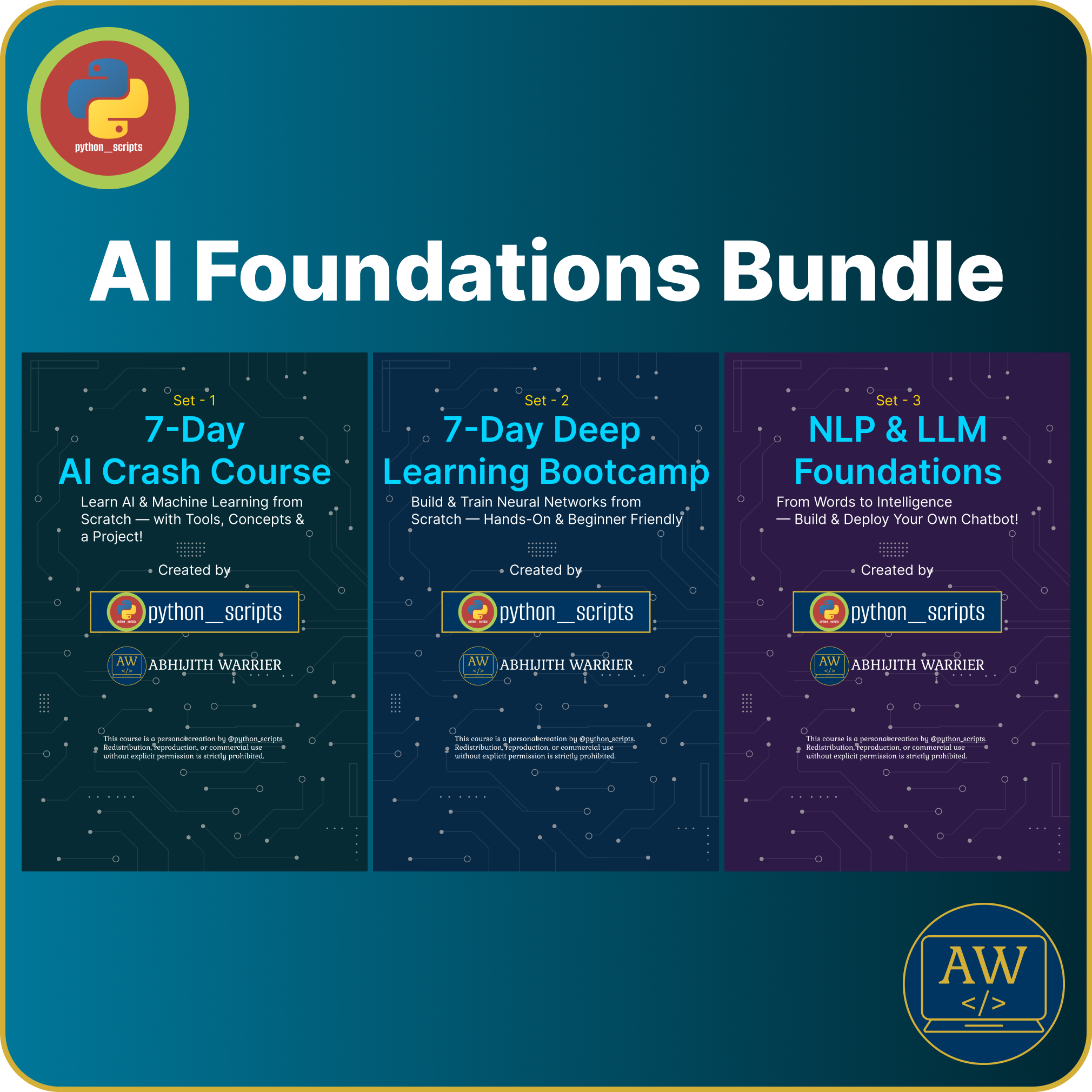
AI Foundations Bundle — From AI Basics to Deep Learning & NLP
Learn AI the right way — from core concepts to deep learning and language models, all in one structured bundle.
Ideal for beginners and developers who want a complete AI roadmap without confusion.
No comments yet. Be the first to comment!