Developer Insights: Infrastructure as Code Best Practices for 2026
Introduction
Infrastructure as Code (IaC) has matured from a productivity booster into a foundational pillar of modern cloud engineering. As teams scale across multi-cloud environments, adopt platform engineering practices, and automate everything from networks to security policies, IaC becomes the blueprint for consistency and control.
In 2026, organisations are no longer just writing IaC — they are optimising it for reliability, security, repeatability, and collaboration. With tools like Terraform, AWS CDK, Pulumi, Crossplane, and cloud-native blueprints, the expectations from IaC have evolved. The focus has shifted toward modular design, automated governance, continuous validation, and protecting state across distributed teams.
IaC is not merely automation; it is architecture expressed in code. Done right, it becomes a force multiplier for engineering velocity.
Why IaC Matters More in 2026
Modern environments are dynamic — workloads scale, ephemeral resources come and go, and cloud accounts multiply quickly. Manual provisioning breaks under this complexity. IaC gives teams the precision, auditability, and repeatability needed to support large-scale cloud adoption.
IaC continues to be essential because:
- Cloud environments change daily, often automatically.
- Security and compliance require predictable and traceable configurations.
- Platform teams must support hundreds of developers safely.
- Multi-account and multi-region deployments require consistent patterns.
- Automation is the only realistic approach at scale.
IaC turns cloud environments into version-controlled, testable, reviewable artifacts.
Core Principles of IaC in 2026
The fundamentals of IaC remain stable, but maturity expectations have increased. Teams focus on principles that balance speed with safety.
- Idempotency - Running code repeatedly should always produce the same infrastructure state. This prevents drift and ensures predictable deployments.
- Declarative Design — Declare what you want, not how to build it. Declarative IaC ensures consistency and simplifies maintenance.
- Modularity — Reusable modules improve governance, reduce duplication, and allow platform teams to define approved building blocks.
- Version Control Everywhere — Infrastructure changes should follow the same review process as application code, including PR workflows and code reviews.
- Automation First — IaC should integrate with CI/CD pipelines to validate, test, and deploy infrastructure changes without manual steps.
These principles guide the evolution of modern cloud engineering.
Best Practices for 2026
- Adopt a Platform Engineering Mindset — Use IaC modules, blueprints, or stacks to standardize network patterns, IAM policies, security baselines, and deployment templates for the entire organization.
- Use Policy-as-Code for Guardrails — Tools like Open Policy Agent, AWS SCPs, HashiCorp Sentinel, and Azure Policies enforce compliance early without blocking developer agility.
- Maintain a Clear State Strategy — Store Terraform state securely (S3 + DynamoDB, Terraform Cloud, or GCS) and protect it with locking mechanisms to avoid race conditions.
- Implement Drift Detection & Continuous Validation — Use tools like Terraform Cloud, AWS Config, Driftctl, or Pulumi ESC to continuously verify that infrastructure matches the desired configuration.
- Structure IaC Repositories for Scale — Use patterns like mono-repo, multi-repo, or environment-based separation depending on the team structure — but enforce consistency across repositories.
- Prefer Managed Services Over Self-Managed Components — Serverless databases, managed Kubernetes, and cloud-native network controls reduce the IaC footprint and improve reliability.
- Build Immutable Infrastructure Pipelines — Avoid patching servers in place. Instead, provision new instances and rotate old ones through blue/green or canary deployments.
- Limit Provider Permissions Using Least Privilege — IaC tools should execute with scoped permissions and audited API activity.
- Document IaC Modules Like Products — Each module should have versioning, change-logs, usage examples, and architectural context.
These practices align with how leading organisations structure cloud operations in 2026.
Conclusion
Infrastructure as Code is evolving from basic automation to a foundational engineering discipline. As cloud environments expand across accounts, regions, and platforms, IaC provides the consistency, security, and repeatability needed for safe scaling. By embracing modular design, strong governance, automation, and continuous validation, teams build cloud foundations that are resilient, predictable, and easy to maintain.
IaC has never been just about provisioning resources. In 2026, it is about expressing architecture, enforcing standards, and accelerating organisational delivery through automation and clarity.
Key Takeaways
- IaC is critical for multi-cloud, multi-account, and large-scale environments.
- Strong practices like modularity, idempotency, and drift detection ensure reliability.
- Policy-as-code enforces compliance without slowing down developers.
- Platform engineering patterns enhance organisational consistency.
- IaC becomes a central part of system design, governance, and DevOps workflows.
References
Comments
Add Your Comment
Related Posts
Production Engineering: What Incident Timelines Don’t Show
0 14
Production Engineering: Technical Debt — When to Fix, When to Ignore
0 108
Engineering Decisions: What Makes Senior Engineers Valuable Beyond Code
0 111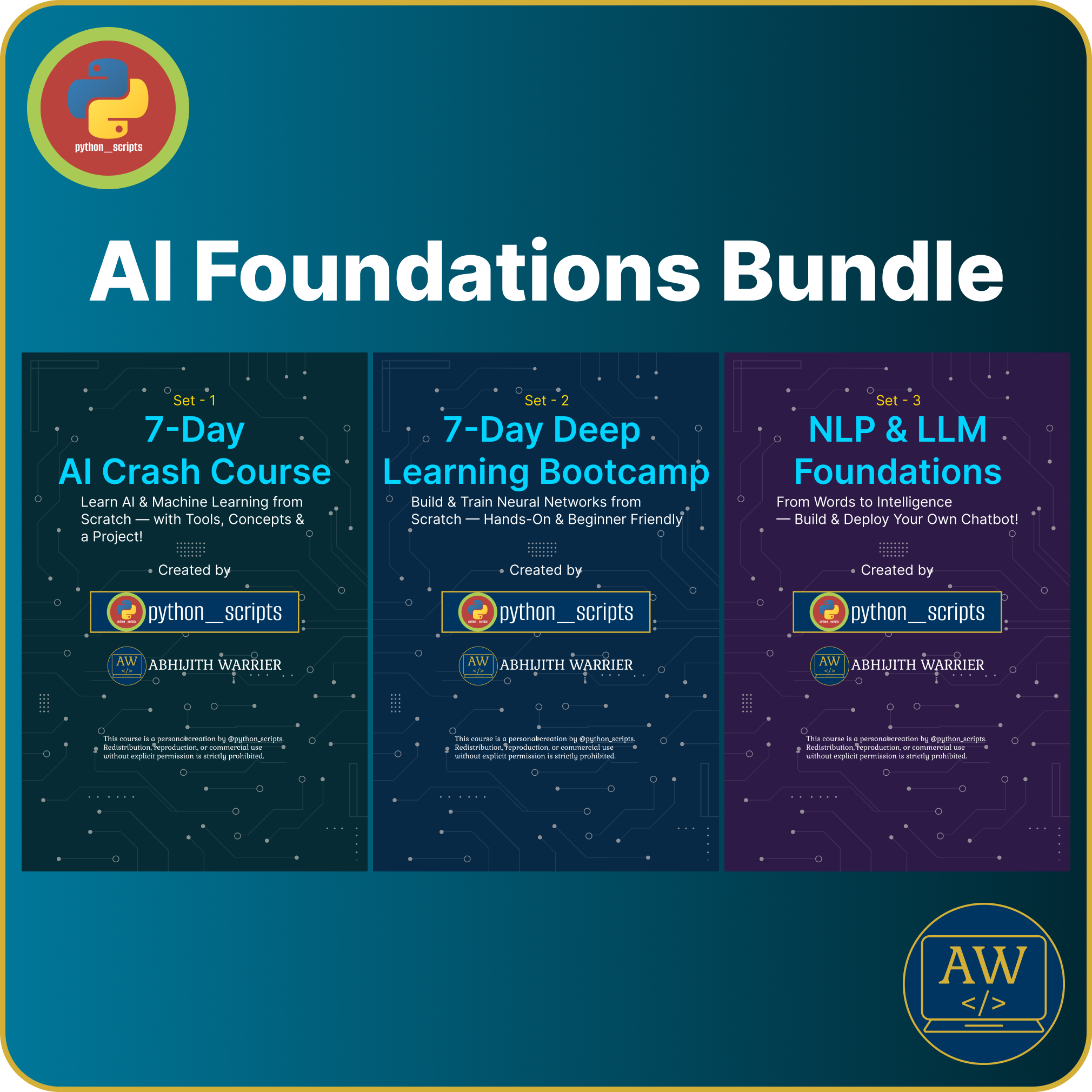
AI Foundations Bundle — From AI Basics to Deep Learning & NLP
Learn AI the right way — from core concepts to deep learning and language models, all in one structured bundle.
Ideal for beginners and developers who want a complete AI roadmap without confusion.
No comments yet. Be the first to comment!