AWS: CloudFormation vs Terraform – Pros and Cons
Introduction:
Infrastructure as Code (IaC) has become a foundational practice for modern cloud engineering. As systems grow more distributed and complex, manually configuring cloud resources is no longer sustainable. IaC tools bring repeatability, auditability, and automation to the infrastructure lifecycle.
Among the most commonly compared IaC tools are AWS CloudFormation and HashiCorp Terraform. Both allow you to describe infrastructure using declarative templates, but their design philosophies, flexibility, and ecosystem support diverge significantly. For developers, architects, and platform teams, choosing the right tool matters — not just for current workflows, but also for long-term maintainability and team-wide adoption.
Where They Fit in the IaC Ecosystem:
CloudFormation is AWS’s native IaC service, tightly integrated into the platform, aligned with AWS features, and designed to support lifecycle management of cloud resources. Terraform, meanwhile, is a multi-cloud IaC orchestrator with its own state engine, its own workflow, and a massive provider ecosystem enabling it to manage infrastructure across AWS, Azure, GCP, SaaS platforms, and even custom services.
The choice between the two often reflects organisational priorities: deep AWS-native alignment vs multi-cloud flexibility, opinionated workflows vs provider-driven extensibility, stability vs speed of iteration.
CloudFormation — Strengths and Limitations:
Pros:
-
AWS-native integration
CloudFormation is deeply tied into AWS APIs, IAM, CloudTrail, Config, and service-level features. Any AWS launch is typically supported natively.
-
No external state management
The service maintains its own state through Stack and StackSets, simplifying team adoption.
-
Drift detection & rollback support
Built-in capabilities help detect out-of-band changes and revert to last-known-good configuration.
-
Stability and predictable lifecycle
AWS prioritises backward compatibility and long-term support for CloudFormation templates.
-
Cost and security simplicity
No extra tools to install; no external state files that need to be secured.
Cons:
-
Slower to support new AWS services
AWS tries to keep CloudFormation aligned with new launches, but Terraform providers often get support faster.
-
Verbose syntax (YAML/JSON)
Templates can become long, repetitive, and harder to modularize without additional tooling.
-
Limited ecosystem
CloudFormation is AWS-only. Not suited for hybrid or multi-cloud architectures.
-
Complex change sets
Previewing changes requires generating change sets, which can feel cumbersome compared to Terraform’s plan.
Terraform — Strengths and Limitations:
Pros:
-
Multi-cloud & multi-provider support
Terraform can manage AWS resources and thousands of other services through providers — a huge advantage for diverse ecosystems.
-
Readable HCL syntax
HCL is more expressive and developer-friendly than YAML/JSON.
-
Strong modularity
Modules promote reusable architecture components and structure.
-
Terraform CLI workflow
terraform plan and apply give clear visibility into infrastructure changes before execution.
-
Fast provider evolution
Community-driven updates often mean new AWS services appear in the AWS provider quickly.
Cons:
-
State management complexity
Terraform’s remote state (e.g., S3 + DynamoDB) must be secured, locked, and maintained.
-
Breaking provider changes
Providers evolve rapidly, sometimes introducing version conflicts or breaking behaviors.
-
Requires installation & tooling
Teams must maintain Terraform CLIs, providers, version pinning, and state backends.
-
Not AWS-native
Lacks deep integration with certain AWS-native constructs (e.g., full parity with CloudFormation drift detection).
CloudFormation vs Terraform — Direct Comparison:
| Feature | CloudFormation | Terraform |
|---|---|---|
| Cloud Support | AWS-only | Multi-cloud, SaaS, custom |
| Language | YAML / JSON | HCL |
| State | Managed by AWS | Managed by user (remote backends recommended) |
| Speed of Updates | Slower | Faster (community + AWS provider) |
| Modularity | Nested stacks | Module system |
| CLI UX | Change Sets + Stack operations | Plan → Apply workflow |
| Learning Curve | Simpler if AWS-only | Slightly steeper, but more flexible |
| Automation | Deep AWS integration | Works across ecosystems |
| Extensibility | Limited to AWS | Thousands of providers |
Choosing the Right Tool:
Your choice depends on your environment’s priorities:
Choose CloudFormation if:
- You operate 100% within AWS
- You need native AWS integration, guardrails, and governance
- You prefer minimal operational overhead
- You want AWS to manage state and lifecycle
- You already use AWS services like SAM or CDK that build on top of CloudFormation
Choose Terraform if:
- You manage infrastructure across multiple cloud providers
- You want to unify IaC for AWS + SaaS + internal systems
- You need strong modularity and a clean workflow
- You value provider ecosystem breadth
- You want more expressive configuration (HCL)
In many enterprises, Terraform becomes the choice for large multi-cloud platforms, while CloudFormation remains ideal for AWS-centric, deeply integrated teams.
Best Practices for IaC Regardless of Tool:
- Version-control all templates
- Enforce code reviews for infrastructure changes
- Use modular structures for reuse and maintainability
- Implement CI/CD pipelines for IaC deployments
- Control state access tightly (Terraform)
- Avoid manual console changes to prevent drift
- Document infrastructure design decisions
Conclusion:
CloudFormation and Terraform are both powerful IaC tools — but they serve different philosophies. CloudFormation offers the reliability and tight alignment of an AWS-native service, while Terraform provides ecosystem flexibility and portability across clouds. The right choice depends on your architectural goals, governance model, and how broadly you need to manage infrastructure.
If your organization is AWS-first, CloudFormation may feel natural. If you operate across clouds or depend on diverse SaaS integrations, Terraform provides unmatched reach.
Both tools can coexist as part of a mature platform strategy — the key is choosing intentionally based on where your infrastructure is headed.
References:
Comments
Add Your Comment
Related Posts
AWS in Production: AWS Cost Anomalies — Detecting Spikes Before Finance Does
0 20
AWS in Production: Cloud Governance — Balancing Speed, Cost, and Control
0 26
AWS Architecture: Multi-Region Data Consistency — What Breaks First
0 80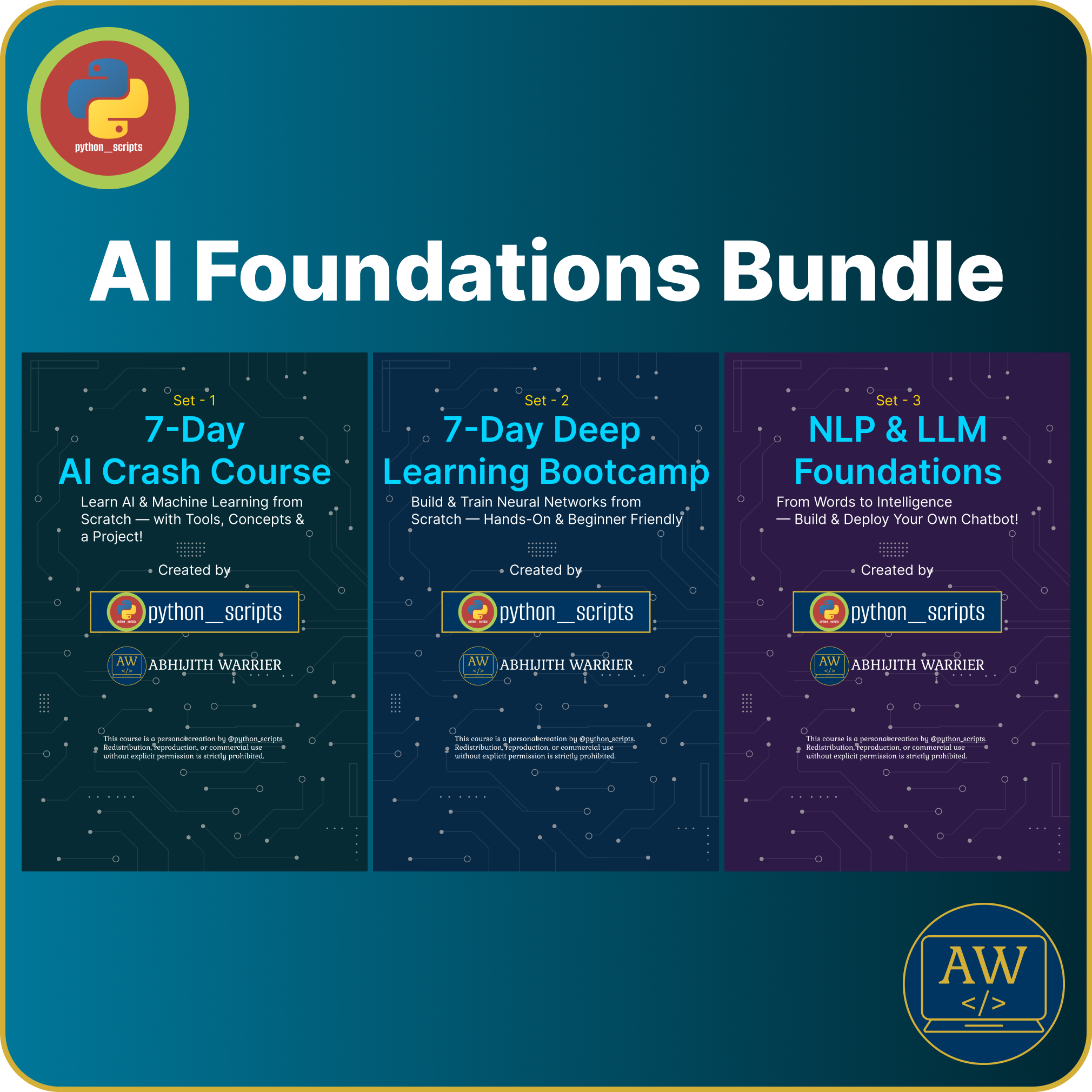
AI Foundations Bundle — From AI Basics to Deep Learning & NLP
Learn AI the right way — from core concepts to deep learning and language models, all in one structured bundle.
Ideal for beginners and developers who want a complete AI roadmap without confusion.
No comments yet. Be the first to comment!