AI Insights: How AI Is Revolutionizing Drug Discovery
Introduction:
Drug discovery has long been a slow, expensive, and uncertain process. Traditional methods can take more than a decade and billions of dollars to bring a single drug to market. Much of this time is spent navigating an enormous search space — identifying targets, screening molecules, running safety tests, and optimizing candidates through repeated experimentation.
AI is now reshaping this workflow. By combining machine learning, biological data, simulations, and generative models, AI enables researchers to explore chemical and biological possibilities at speeds that were previously impossible. Tasks that once took months can now be done in hours, making AI one of the most powerful accelerators in pharmaceutical research.
Why Traditional Drug Discovery Is Slow and Expensive
The main challenge is scale. Human researchers cannot manually test or reason through millions of potential molecular combinations. Biological systems introduce additional complexity: unpredictable interactions, toxicity issues, and high failure rates in late-stage trials.
Early discovery is also dominated by trial-and-error — a low-yield process that wastes significant time and resources. AI changes this by filtering, prioritizing, and predicting outcomes earlier in the pipeline, dramatically improving efficiency and success rates.
How AI Accelerates the Drug Discovery Pipeline
-
Target Identification and Validation:
AI models trained on genomic and proteomic datasets can identify disease-related genes and pathways, helping researchers focus on targets with genuine therapeutic potential.
-
Molecule Generation Using Generative Models:
Techniques such as GANs and reinforcement learning generate new molecules optimized for specific properties like binding strength, absorption, and toxicity — going far beyond traditional chemical libraries.
-
Virtual Screening and Simulation:
AI can evaluate millions of compounds digitally, predicting how each will interact with a biological target. Graph Neural Networks (GNNs) excel here by modeling molecular structures and behaviors with high accuracy.
-
Lead Optimization:
After identifying promising candidates, AI helps refine them further — adjusting molecular features, predicting off-target effects, and improving overall stability and safety before synthesis.
-
Predicting Safety, Toxicity, and Success Probability:
Using historical trial data and predictive models, AI can estimate toxicity risks, drug–drug interactions, dosage responses, and the likelihood of clinical success, reducing costly late-stage failures.
-
Automating Lab Workflows:
AI-driven robotics and intelligent lab assistants can design, run, and analyze experiments, closing the loop between computational predictions and real-world testing.
Real-World Breakthroughs:
AI is no longer theoretical — the pharmaceutical world is already experiencing major outcomes:
- DeepMind’s AlphaFold revolutionized protein structure prediction, solving a challenge scientists had struggled with for 50 years.
- Several AI-designed molecules have entered Phase I clinical trials.
- Companies like Recursion, Insilico Medicine, and Exscientia are using generative AI platforms to accelerate drug discovery pipelines by years.
- AI-based simulation platforms reduce the need for massive physical libraries and repetitive experiments.
These examples demonstrate that AI is not just supporting drug discovery — it is redefining the possibility space.
Best Practices for Using AI in Drug Discovery:
- Integrate AI early into the discovery pipeline, not as an afterthought.
- Combine computational results with expert domain knowledge — AI accelerates science, it doesn’t replace it.
- Ensure high-quality datasets and proper model validation.
- Maintain transparency and traceability, especially in regulated environments.
- Invest in cross-functional teams: biologists, chemists, ML researchers, and data engineers.
- Use AI to guide experiments, not dictate them — human expertise remains essential.
Ethical Considerations:
With AI’s increasing power in biomedical innovation, responsible development becomes critical. Models must avoid bias, predictions should be explainable, and patient data must be protected with the highest privacy safeguards. Regulatory bodies are evolving to ensure AI-driven drug development remains safe, fair, and trustworthy.
Conclusion:
AI is transforming drug discovery from a slow, costly, sequential process into a faster, data-driven, iterative discipline. From identifying targets to designing novel molecules and predicting clinical outcomes, AI accelerates every stage of the pipeline. As models become more accurate and datasets grow richer, the future of drug development looks dramatically more efficient, personalized, and scientifically ambitious.
AI won’t replace scientists — but scientists who use AI will redefine what’s possible in medicine.
References:
Enjoyed this post?
Stay in the loop
New posts + weekly digest, straight to your inbox.
Create a free account
- Save posts to your vault
- Like posts & build history
- New-post alerts
Comments
Add Your Comment
Related Posts
AI in Production: Why LLM Evaluation Is Still an Unsolved Problem
0 69
AI in Production: When AI Becomes Too Expensive to Scale
0 88
AI in Production: Why AI Systems Need Observability More Than Accuracy
0 84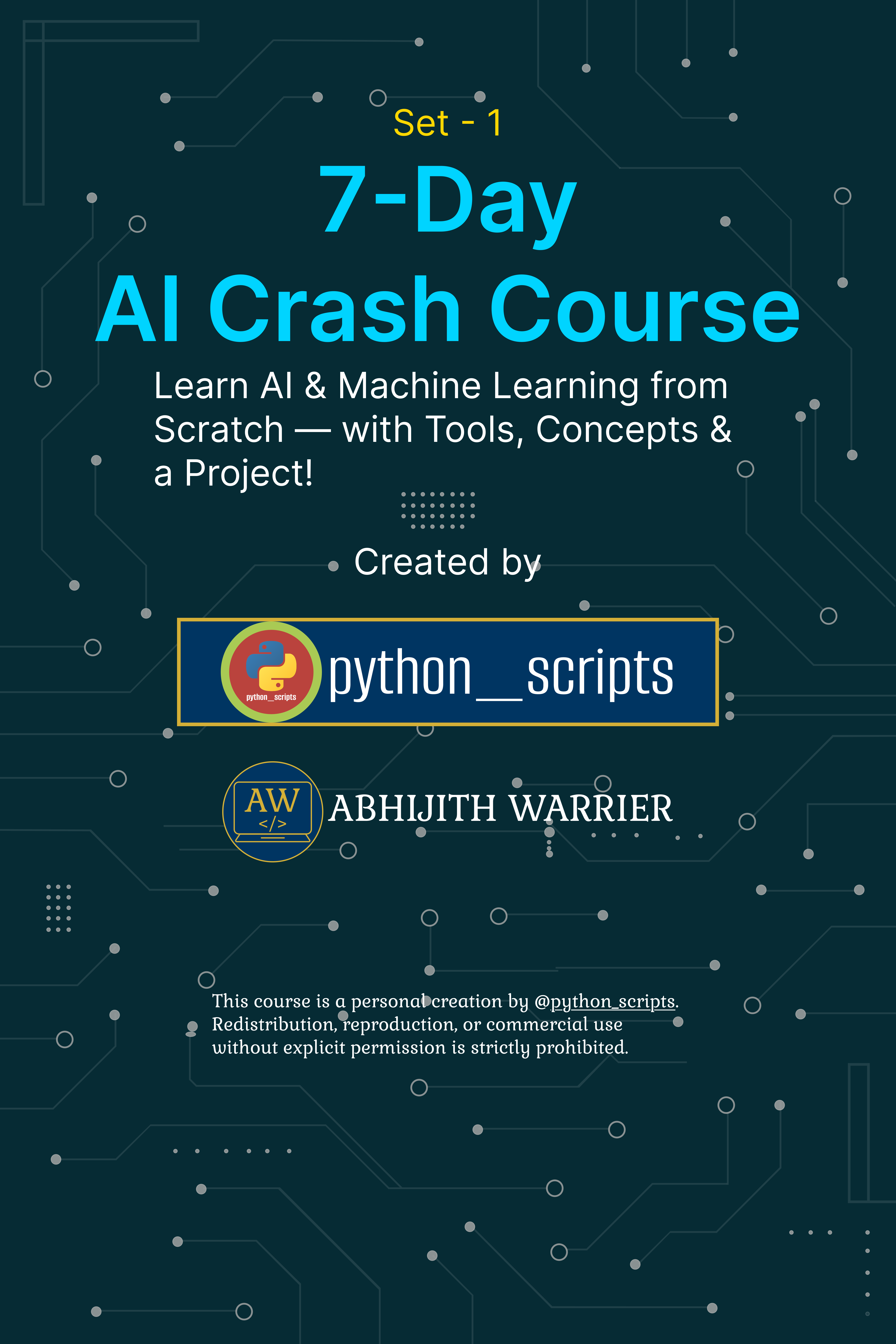
7-Day AI Crash Course
Learn how AI works, explore real-world examples, and build your first smart models step-by-step.
Perfect for beginners, students, and tech enthusiasts ready to start their AI journey.
No comments yet. Be the first to comment!