
Developer Insights: Testing Micro-services – Strategies for Resilience at Scale
Introduction:
Micro-services promise speed, scalability, and independent deployment. In reality, they also introduce a new class of failure modes that traditional testing strategies were never designed to handle. A single request may traverse dozens of services, networks, queues, caches, and external APIs — any one of which can fail in unpredictable ways.
Testing micro-services, therefore, is not just about correctness. It is about resilience: how systems behave under partial failure, degraded dependencies, high latency, and unexpected traffic patterns. This blog explores how testing must evolve to support micro-services at scale, and which strategies actually matter in production environments.
Why Testing Micro-services Is Fundamentally Different?
In monolithic systems, most failures are local and deterministic. In micro-services, failures are distributed and emergent.
Common challenges include:
- Network latency and packet loss
- Partial outages across dependencies
- Eventual consistency issues
- Version mismatches during rolling deployments
- Cascading failures under load
Testing only for happy paths creates a false sense of confidence. Resilient systems are built by testing for failure as a first-class condition.
The Testing Pyramid Still Applies — With Adjustments:
The classic testing pyramid (unit → integration → end-to-end) still holds, but its emphasis shifts in micro-services environments.
- Unit tests remain essential for business logic
- Integration tests become more important than before
- End-to-end tests must be limited and intentional
Over-reliance on full end-to-end tests leads to slow pipelines and brittle test suites. Resilience comes from testing service boundaries, not entire workflows every time.
Contract Testing: Stabilizing Service Boundaries:
Contract testing ensures that services agree on request and response expectations without requiring them to be deployed together.
This approach:
- Detects breaking API changes early
- Decouples teams and deployment cycles
- Reduces dependency on shared environments
A provider can validate that it still meets consumer expectations even as internal implementations change.
Example: Consumer-Driven Contract (Pact)
from pact import Consumer, Provider

pact = Consumer('OrderService').has_pact_with(
    Provider('PaymentService'),
    port=1234
)

pact.given('payment is successful') \
    .upon_receiving('a payment request') \
    .with_request('post', '/pay') \
    .will_respond_with(200, body={'status': 'success'})
Contract tests act as guardrails, preventing accidental API drift.
Integration Testing with Real Dependencies (Selectively):
Mocks are useful, but over-mocking hides real-world behavior. For critical paths, integration tests should run against real services or realistic substitutes.
Best practices include:
- Using ephemeral test environments
- Testing against real databases with isolated schemas
- Validating message queues and event flows
The goal is not to replicate production fully, but to test behavior under realistic conditions.
Failure Injection and Chaos Testing:
Resilient systems are designed by intentionally breaking them.
Failure injection helps teams understand:
- How services behave when dependencies are slow or unavailable
- Whether retries, timeouts, and circuit breakers work as intended
- How failures propagate across service boundaries
This type of testing is especially valuable in staging and pre-production environments.
Testing Timeouts, Retries, and Circuit Breakers:
Many outages are caused not by failures themselves, but by poor failure handling.
Key areas to validate:
- Timeouts are set and enforced
- Retries are bounded and backoff is applied
- Circuit breakers trip under sustained failure
These mechanisms must be tested explicitly — not assumed to work.
Load and Stress Testing in Distributed Systems:
Micro-services introduce non-linear scaling behavior. A small increase in traffic can overwhelm a downstream service or shared dependency.
Effective load testing focuses on:
- Identifying bottleneck services
- Observing queue growth and thread exhaustion
- Measuring tail latency, not just averages
Testing at realistic concurrency levels reveals failure patterns that functional tests never surface.
Observability-Driven Testing:
Logs, metrics, and traces are not just operational tools — they are testing tools.
Resilience testing should verify:
- Errors are logged meaningfully
- Metrics reflect degraded states
- Traces clearly show failure paths
If a failure cannot be observed, it cannot be reliably tested or fixed.
Testing in CI/CD Pipelines Without Slowing Teams Down:
One of the biggest mistakes is trying to run every test at every stage.
A practical approach:
- Fast unit and contract tests on every commit
- Integration tests on pull requests
- Load and chaos tests on scheduled or pre-release runs
This keeps feedback loops fast while still validating resilience.
Common Testing Anti-Patterns:
Even mature teams fall into these traps:
- Relying solely on end-to-end tests
- Mocking everything and trusting assumptions
- Skipping failure scenarios
- Treating testing as separate from observability
Resilience emerges from continuous validation, not one-time certification.
Conclusion:
Testing micro-services is less about proving correctness and more about building confidence under uncertainty. As systems grow in size and complexity, resilience cannot be added after deployment — it must be validated continuously through thoughtful testing strategies.
Teams that invest in contract testing, failure injection, and observability-driven validation are better equipped to handle real-world chaos. At scale, resilience is not accidental — it is tested.
References:
Comments
Add Your Comment
Related Posts
Production Engineering: What Incident Timelines Don’t Show
0 15
Production Engineering: Technical Debt — When to Fix, When to Ignore
0 111
Engineering Decisions: What Makes Senior Engineers Valuable Beyond Code
0 115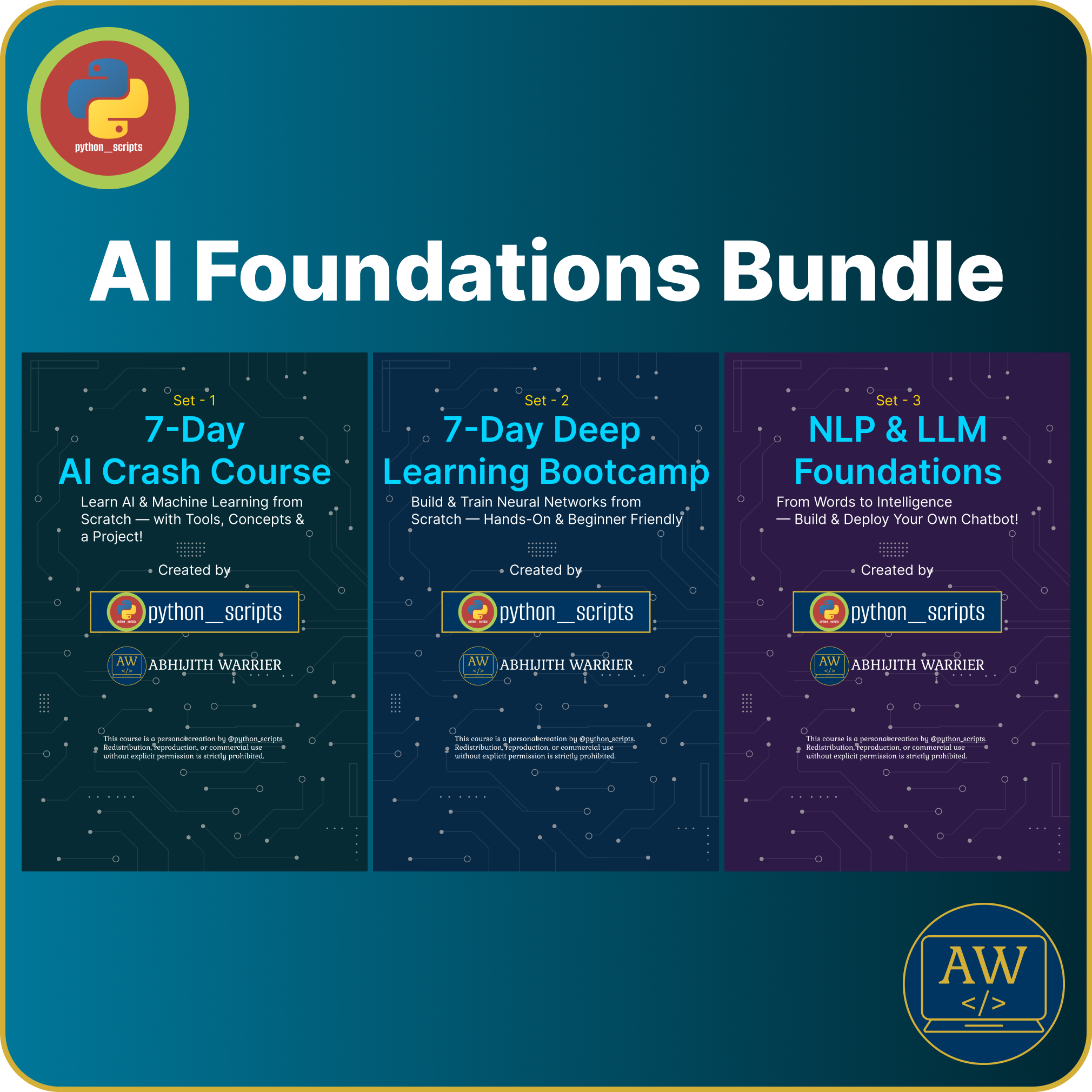
AI Foundations Bundle — From AI Basics to Deep Learning & NLP
Learn AI the right way — from core concepts to deep learning and language models, all in one structured bundle.
Ideal for beginners and developers who want a complete AI roadmap without confusion.
No comments yet. Be the first to comment!