Tech Insights: Generative AI in the Enterprise – Real Use Cases & Architecture
Introduction:
Generative AI is no longer a novelty inside enterprises. The early phase of chatbots and isolated pilots has exposed a clear reality: models alone do not create value. What matters is how generative AI is designed, constrained, and embedded into real enterprise systems.
Enterprises are now moving away from experimentation toward production deployments, where reliability, security, cost control, and governance matter as much as output quality. This shift turns generative AI into an architecture problem, not a tooling choice.
This blog focuses on where generative AI actually works in enterprises today and the architectural patterns that make those systems scalable and safe.
Why Enterprise GenAI Is Different from Consumer AI?
Consumer AI products optimize for delight and exploration. Enterprise AI optimizes for predictability and control.
Enterprises operate with:
- sensitive and regulated data
- strict access boundaries
- legacy systems that cannot be replaced
- low tolerance for unpredictable behavior
Because of this, generative AI cannot operate freely. It must be bounded by architecture, integrated into existing platforms, and observable end to end. Any system that bypasses these constraints is unlikely to survive beyond pilot phase.
Enterprise Use Cases That Actually Scale:
The most successful enterprise deployments share one trait: they augment existing workflows instead of attempting full automation.
Internal Knowledge Search and Q&A
One of the most common and effective use cases is internal knowledge access. Enterprises have large volumes of documentation, tickets, design notes, and operational data that are difficult to navigate.
Generative AI is used to:
- retrieve relevant internal documents
- summarize across multiple sources
- provide contextual answers grounded in enterprise data
The model is not trusted to invent knowledge. It is used to compress and contextualize what already exists.
Customer Support and Operations:
In support environments, generative AI assists rather than replaces agents.
Typical capabilities include:
- summarizing tickets and conversations
- suggesting draft responses
- surfacing policies and historical resolutions
This improves consistency and response time while keeping humans in the loop for final decisions.
Engineering and Developer Productivity:
Generative AI has found strong adoption in engineering workflows because boundaries are well defined.
Common uses include:
- code generation and refactoring
- test case suggestions
- log and error explanation
These systems work because outputs are reviewed, corrected, and validated by engineers before use.
Enterprise Content and Reporting:
Many enterprises use generative AI to reduce effort in structured writing tasks.
Examples include:
- drafting internal reports
- summarizing meeting notes
- generating first-pass documentation
- content localization and translation
The value comes from speed, not creativity.
The Core Enterprise GenAI Architecture:
In production, generative AI systems follow a layered design. The model is only one component in a broader system.
A typical enterprise architecture includes:
- user interface or API layer
- context and prompt orchestration
- enterprise data retrieval
- foundation model (LLM)
- output validation and formatting
- logging, monitoring, and governance
This separation allows teams to evolve models, prompts, and data sources independently.
Retrieval-Augmented Generation as the Default Pattern:
Most enterprises do not allow models to answer questions without grounding. Retrieval-Augmented Generation (RAG) has become the default approach.
In a RAG setup:
- enterprise data is indexed and embedded
- relevant context is retrieved per request
- the model generates responses using only retrieved content
This pattern:
- reduces hallucinations
- respects data boundaries
- improves trust and auditability
RAG shifts the system from “what the model knows” to “what the enterprise knows.”
Prompt Orchestration and Control Layers:
In enterprise systems, prompts are not static strings. They are assembled dynamically based on context.
Prompt orchestration typically considers:
- user role and permissions
- retrieved documents
- conversation history
- business rules and constraints
This layer enforces guardrails, controls output format, and prevents sensitive data leakage. Without it, enterprises lose predictability.
Model Strategy in the Enterprise:
Enterprises rarely rely on a single model.
Common approaches include:
- hosted foundation models for general tasks
- fine-tuned models for domain-specific workflows
- private or open-weight models for sensitive workloads
Architectures are increasingly model-agnostic, allowing teams to switch models without redesigning the system.
Security, Governance, and Compliance:
Generative AI introduces new risk surfaces that must be managed explicitly.
Enterprise systems typically enforce:
- role-based access control
- prompt and response logging
- data residency and retention policies
- abuse and misuse detection
Governance is part of the core architecture, not an afterthought.
Cost and Performance Considerations:
Generative AI costs scale differently from traditional services. Usage is driven by:
- token volume
- context size
- request frequency
Architectural choices such as caching, prompt trimming, and selective model usage directly affect cost. Enterprises that ignore this early often face budget issues later.
Why Architecture Determines Success?
The difference between a demo and a production system is rarely the model. It is how well the system:
- integrates with enterprise data
- controls and validates outputs
- scales reliably under load
- fits into real business workflows
Enterprises that treat generative AI as infrastructure progress faster than those that treat it as experimentation.
Conclusion:
Generative AI is becoming a permanent part of enterprise systems, but only when deployed thoughtfully. Real value comes from grounded use cases, layered architectures, and strong governance—not from model novelty.
As enterprises move from pilots to production, success will be defined less by which model they choose and more by how well they design the systems around it. In enterprise generative AI, architecture is the differentiator.
References:
Comments
Add Your Comment
Related Posts
CES 2026: What Actually Mattered (And What It Tells Us About the Next Tech Cycle)?
0 44
Tech Insights: AI Agents in Production – From Chatbots to Autonomous Workflows
0 43
Tech Insights: Edge Computing in Practice – Running Workloads Closer to Users
0 61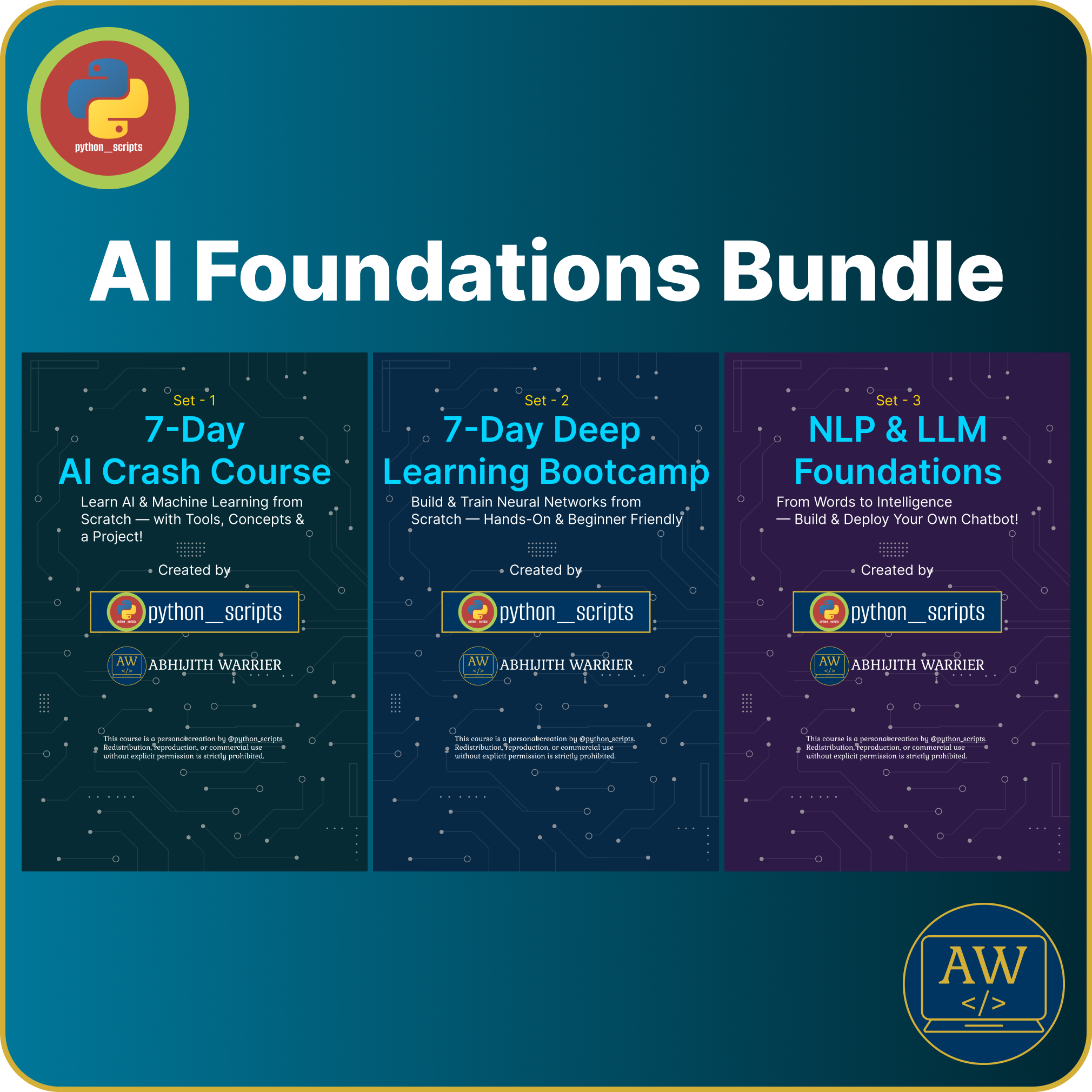
AI Foundations Bundle — From AI Basics to Deep Learning & NLP
Learn AI the right way — from core concepts to deep learning and language models, all in one structured bundle.
Ideal for beginners and developers who want a complete AI roadmap without confusion.
No comments yet. Be the first to comment!