AI in Production: Human-in-the-Loop Isn’t Optional – It’s Architecture
Introduction:
As AI systems mature, there’s a growing temptation to remove humans from the loop entirely. Automation promises speed, scale, and consistency. On paper, fully autonomous systems look efficient.
In practice, they rarely survive contact with the real world.
Human-in-the-loop is often discussed as a temporary safety measure or a fallback. That framing is wrong. In production systems, human involvement isn’t a patch — it’s an architectural decision.
Automation Fails at the Edges:
AI systems perform well within the boundaries they were trained and tested for. The moment reality drifts — unexpected inputs, ambiguous cases, shifting user behaviour — the system starts making confident but wrong decisions.
These failures aren’t rare edge cases. They’re inevitable.
Human judgment becomes essential precisely where automation is weakest: ambiguity, nuance, and accountability.
Removing Humans Doesn’t Remove Responsibility:
When systems act autonomously, responsibility doesn’t disappear — it just becomes harder to trace.
Teams still own outcomes, even when decisions are made by models. Without explicit human checkpoints, errors propagate silently until they surface as incidents, compliance violations, or customer harm.
Human-in-the-loop creates clear decision boundaries. It makes responsibility explicit instead of implicit.
Human Intervention Is a Control Surface:
Well-designed systems treat human involvement as a control surface, not an exception.
This includes:
- review points for high-impact decisions
- override mechanisms when confidence is low
- escalation paths when signals conflict
These aren’t signs of weak automation. They’re signs of mature system design.
Confidence Thresholds Are Architectural Choices:
Deciding when a human should be involved is not a model problem — it’s an architectural one.
Thresholds, fallbacks, and routing logic define how the system behaves under uncertainty. These decisions shape reliability, safety, and trust more than marginal model accuracy improvements.
Ignoring this layer leads to brittle systems that fail unpredictably.
Pure Automation Breaks Trust Faster:
Users tolerate slower systems more than unexplainable ones.
When AI decisions can’t be questioned, corrected, or understood, trust erodes quickly. Human checkpoints provide transparency and reassurance, even when automation is doing most of the work.
Trust is not built by perfection. It’s built by recoverability.
Scaling Humans Is Different From Removing Them:
The real challenge isn’t eliminating humans — it’s scaling human involvement intelligently.
This means:
- narrowing human review to meaningful cases
- supporting humans with context, not raw data
- designing workflows that respect attention and cognitive load
Systems that treat humans as last-minute patches burn people out. Systems that design with humans scale sustainably.
Why Teams Get This Wrong:
Human-in-the-loop is often removed too early, usually for the wrong reasons: performance benchmarks, cost pressure, or the desire to appear “fully automated.”
These decisions optimise for demos, not durability.
The cost shows up later — in incidents, reversals, and emergency reintroductions of manual controls.
Conclusion:
Human-in-the-loop isn’t a temporary compromise. It’s a recognition of how real systems operate under uncertainty.
The strongest AI architectures don’t eliminate humans — they integrate them intentionally. Systems that acknowledge limits last longer, fail safer, and earn trust over time.
Automation isn’t about replacing humans. It’s about deciding where humans matter most.
Comments
Add Your Comment
Related Posts
AI in Production: Human-in-the-Loop Systems — Where AI Must Stop
0 8
AI Insights: Latency, Cost, and Accuracy — The AI Trade-off Triangle
0 25
AI Insights: Why Most AI Proof-of-Concepts Never Reach Production?
0 26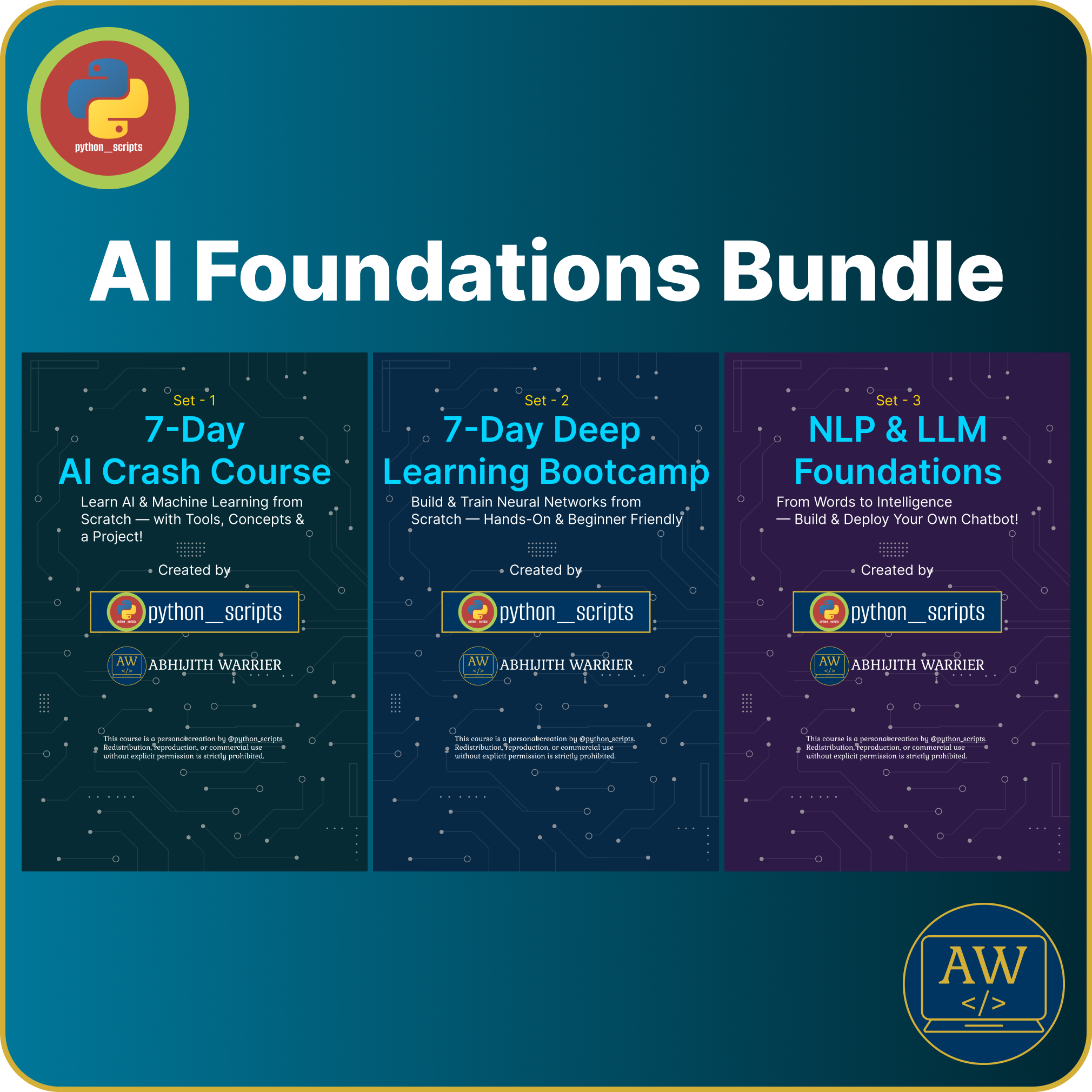
AI Foundations Bundle — From AI Basics to Deep Learning & NLP
Learn AI the right way — from core concepts to deep learning and language models, all in one structured bundle.
Ideal for beginners and developers who want a complete AI roadmap without confusion.
No comments yet. Be the first to comment!