AI in Production: Human-in-the-Loop Systems — Where AI Must Stop
Introduction:
As AI systems become more capable, the temptation to automate everything grows stronger. Models get faster, cheaper, and more accurate. The question quietly shifts from can we automate this? to why shouldn’t we?
This is where many systems go wrong.
The most resilient AI systems aren’t those that remove humans entirely. They’re the ones that know exactly where automation should stop.
Automation Is Strongest Where Context Is Stable:
AI performs best in environments with clear patterns and consistent inputs. Repetitive decisions, well-defined rules, and predictable outcomes are ideal candidates for automation.
The moment context becomes ambiguous, dynamic, or value-driven, AI confidence often outpaces correctness. These aren’t edge cases — they’re common in real-world systems.
Human-in-the-loop exists to absorb uncertainty where models cannot.
The Danger of Overconfident Systems:
One of AI’s most dangerous traits is confidence.
Models rarely say “I don’t know” unless explicitly designed to. When systems act decisively in uncertain situations, errors propagate silently. Users may not notice until consequences become serious.
Human checkpoints act as friction — slowing decisions just enough to prevent irreversible mistakes.
Where AI Must Stop Making Decisions:
There are classes of decisions where full automation creates unacceptable risk.
These typically involve:
- irreversible actions
- legal or ethical implications
- safety-critical outcomes
- unclear or conflicting signals
In these cases, AI should inform decisions, not finalise them.
Human Review Is Not a Failure Mode:
Human involvement is often framed as a temporary fallback — something to remove once models “improve.”
This mindset is flawed.
Human review is a structural component of robust systems. It provides judgment, accountability, and adaptability that automation alone cannot replicate.
Removing humans doesn’t remove responsibility. It just obscures it.
Designing the Stop Points Is an Architectural Choice:
Deciding where AI stops is not a model problem. It’s an architecture problem.
Confidence thresholds, escalation rules, and override paths, all define how decisions flow. These mechanisms determine whether a system fails safely or catastrophically.
Systems without clear stop points tend to fail loudly and unpredictably.
Latency and Cost Are Not Valid Reasons to Remove Humans:
Performance pressure often pushes teams to eliminate human review.
Latency targets tighten. Costs grow. Automation looks like the easiest solution.
But removing humans to optimise metrics often increases long-term cost through incidents, reversals, and trust loss. Fast wrong decisions are more expensive than slow correct ones.
Trust Depends on Recoverability:
Users don’t expect systems to be perfect. They expect them to be correctable.
Human-in-the-loop provides a way to question, override, and recover. Systems that allow intervention earn trust faster than those that operate as black boxes.
Trust is built through recoverability, not autonomy.
Why Teams Delay This Decision:
Defining stop points forces uncomfortable conversations.
Teams must confront uncertainty, responsibility, and failure scenarios. It’s easier to defer these decisions and rely on model performance alone.
Unfortunately, these conversations resurface later — usually during incidents.
Conclusion:
The question isn’t how far AI can go. It’s where it must stop.
Human-in-the-loop systems acknowledge that intelligence has limits and that judgment still matters. The strongest AI architectures don’t aim for full autonomy — they design intentional boundaries.
Automation works best when it knows when to step aside.
Comments
Add Your Comment
Related Posts

AI Insights: When NOT to Use Generative AI in Enterprise Systems
0 26
AI in Production: AI Observability — Monitoring Models, Prompts, and Drift
0 28
AI in Production: AI Failures in Production — What Went Wrong
0 74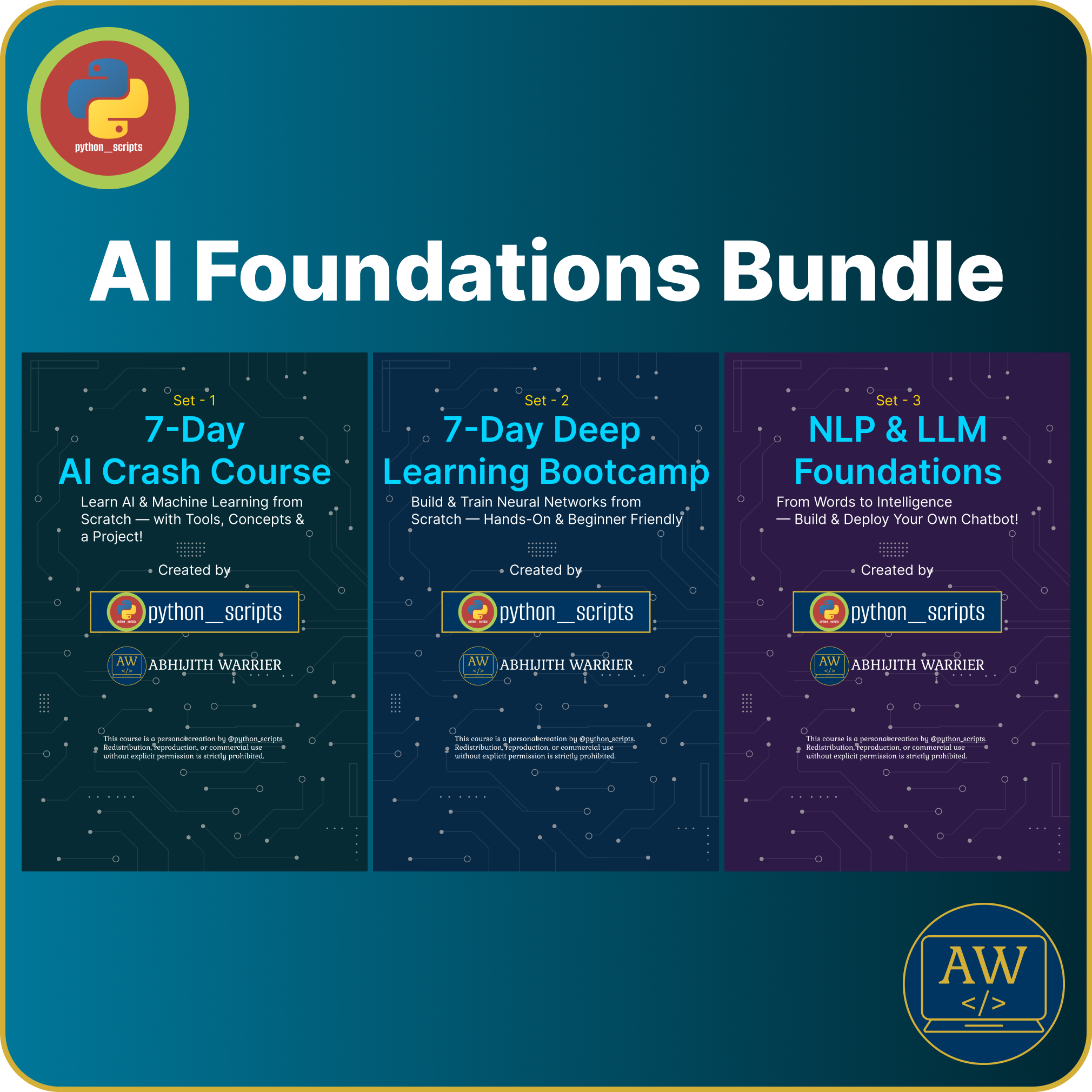
AI Foundations Bundle — From AI Basics to Deep Learning & NLP
Learn AI the right way — from core concepts to deep learning and language models, all in one structured bundle.
Ideal for beginners and developers who want a complete AI roadmap without confusion.
No comments yet. Be the first to comment!