
AI Insights: When NOT to Use Generative AI in Enterprise Systems
Introduction:
Generative AI has become the default solution in many enterprise conversations. Internal tools, customer workflows, reporting systems — everything seems like a candidate for automation through large language models.
But not every problem benefits from generative AI.
In some cases, introducing generative models increases risk, cost, and operational complexity without delivering proportional value. Knowing when not to use generative AI is as important as knowing when to deploy it.
When Determinism Is Non-Negotiable:
Enterprise systems often require deterministic behaviour.
Financial calculations, compliance workflows, identity verification, and transaction processing demand exact, repeatable outputs. Generative models are probabilistic by nature. Even small variations in output can create inconsistencies.
When correctness must be exact and auditable, rule-based systems or traditional logic often remain the safer choice.
When Explainability Is Legally Required:
In regulated industries, decisions must be traceable.
If a system influences credit approval, insurance pricing, hiring decisions, or healthcare recommendations, the ability to explain “why” matters. Generative AI often produces outputs without clear, structured reasoning paths.
When legal or regulatory frameworks require full explainability, traditional models or structured systems may be more appropriate.
When Latency Budgets Are Extremely Tight:
Some enterprise systems operate under strict latency constraints.
Real-time fraud detection, high-frequency trading, and control systems require predictable response times. Generative models introduce variable latency depending on context length, model size, and load.
In these environments, predictability outweighs flexibility.
When Cost Scales Linearly With Usage:
Generative AI cost often scales with tokens processed or model usage.
In high-volume enterprise workflows, even small per-request costs compound quickly. Systems that process millions of requests per day may find generative models economically unsustainable without strict constraints.
If the value per request is low, traditional automation may provide better ROI.
When Data Sensitivity Is High:
Enterprise data frequently contains sensitive information — financial records, personal data, intellectual property.
Even with private deployments, using generative AI requires careful consideration of data exposure, retention policies, and access controls. In some scenarios, introducing LLMs increases compliance complexity unnecessarily.
If the problem can be solved without sending sensitive data through generative pipelines, simpler solutions may reduce risk.
When Structured Outputs Are Required:
Many enterprise workflows rely on precise, structured outputs.
While generative models can be guided toward structured responses, they are inherently flexible. This flexibility can introduce edge cases and formatting inconsistencies.
When output must integrate seamlessly into deterministic downstream systems, purpose-built parsers or rule engines may be more reliable.
When the Problem Is Already Well Defined:
Generative AI excels in ambiguous, language-heavy, or creative tasks.
If the problem is clearly defined and bounded — such as mapping fields, validating formats, or applying deterministic transformations — adding generative AI may introduce unnecessary unpredictability.
Overusing AI where simple logic suffices increases operational burden without improving outcomes.
When Human Oversight Is Not Feasible:
Generative systems perform best when paired with monitoring and occasional human review.
If the enterprise environment lacks the capacity for oversight, validation, and observability, deploying generative AI increases risk. Autonomous deployment without review loops amplifies failure impact.
AI systems require operational maturity to be safe.
When the “AI Label” Is the Only Justification:
Sometimes generative AI is proposed because it sounds innovative, not because it solves a meaningful problem.
If the system’s objective can be achieved more simply, or if AI does not materially improve outcomes, introducing it adds complexity without strategic value.
Technology decisions should be driven by necessity, not trend alignment.
Conclusion:
Generative AI is powerful, but it is not universal.
Enterprise systems demand reliability, predictability, compliance, and cost discipline. In many cases, simpler architectures — rule-based systems, traditional models, or structured workflows — are more appropriate.
The question is not whether generative AI can be used. It’s whether it should be.
Strong engineering teams treat generative AI as a tool — not a default.
Comments
Add Your Comment
Related Posts
AI Insights: AI Guardrails — Preventing Hallucinations in Production
0 12
AI in Production: AI Observability — Monitoring Models, Prompts, and Drift
0 36
AI in Production: AI Failures in Production — What Went Wrong
0 97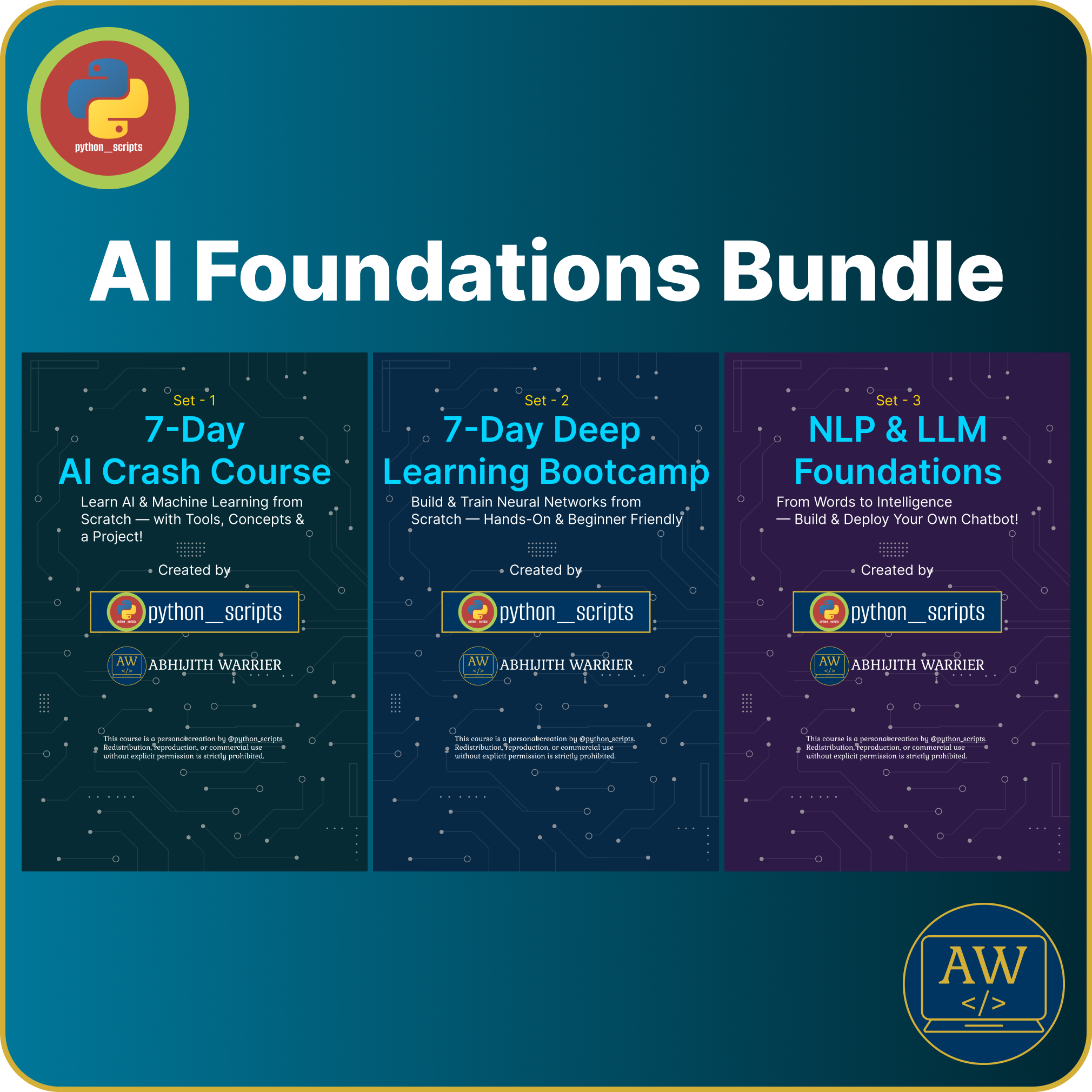
AI Foundations Bundle — From AI Basics to Deep Learning & NLP
Learn AI the right way — from core concepts to deep learning and language models, all in one structured bundle.
Ideal for beginners and developers who want a complete AI roadmap without confusion.
No comments yet. Be the first to comment!