Career Realities: Why Progress Beyond Senior Developer Becomes Difficult?
Introduction:
For many developers, reaching the senior level feels like a major milestone. Years of coding experience, deep technical understanding, and the ability to solve complex problems lead to recognition within teams.
Yet something interesting happens after this stage.
Many engineers remain at the senior level for years — sometimes even decades — without progressing further. It isn’t always due to lack of skill or effort. In many cases, the nature of the work changes in ways developers don’t expect.
Advancing beyond senior requires a shift in how engineers think about impact, ownership, and systems.
Technical Skill Alone Stops Being the Differentiator:
Early in a developer’s career, technical ability drives progression.
Writing better code, solving harder problems, and mastering frameworks make a visible difference. Promotions often follow clear improvements in coding skill.
After the senior level, however, most engineers already possess strong technical foundations. The difference between individuals becomes less about coding ability and more about how they influence systems and teams.
Impact Expands Beyond Individual Contributions:
Senior engineers are expected to deliver high-quality work independently.
But staff-level and principal roles require a broader form of impact. The focus shifts from individual execution to shaping how teams operate and how systems evolve.
Engineers who continue focusing only on their own tasks often struggle to demonstrate the wider influence required for advancement.
System Thinking Becomes Essential:
Large systems rarely fail because of a single line of code.
They fail because of interactions between services, unclear boundaries, operational constraints, or architectural decisions made years earlier. Engineers who move beyond senior roles typically develop a strong understanding of how systems behave as a whole.
This perspective allows them to anticipate problems before they appear.
Communication Becomes a Core Skill:
Many developers underestimate how important communication becomes at higher levels.
Complex ideas must be explained clearly to engineers, managers, and stakeholders. Architectural decisions need alignment across multiple teams. Technical trade-offs must be presented in ways others can understand.
Without strong communication, even good ideas struggle to gain traction.
Ownership Shifts from Tasks to Outcomes:
Senior engineers usually take ownership of features or components.
Beyond that level, engineers are expected to take ownership of outcomes. Instead of focusing on whether a piece of code works, they focus on whether the entire system or initiative succeeds.
This requires thinking about reliability, scalability, operational impact, and long-term maintainability.
Influence Without Authority Becomes Critical:
Higher-level engineers rarely rely on formal authority.
They influence decisions through technical reasoning, credibility, and trust. Guiding architectural direction, resolving disagreements, and helping teams converge on solutions require strong interpersonal skills.
Engineers who develop influence without relying on hierarchy often move forward faster.
Comfort with Ambiguity Matters More:
Many technical problems have clear requirements.
Strategic problems do not. Decisions about architecture direction, platform investments, or technology adoption often come with incomplete information.
Engineers who grow beyond the senior level become comfortable navigating uncertainty and making thoughtful trade-offs.
Learning Often Slows Down After Senior Level:
One subtle reason developers plateau is comfort.
After years of experience, engineers often specialise deeply in familiar technologies. While expertise is valuable, over-specialisation can limit growth.
Continuing to explore new domains — architecture, distributed systems, leadership, or product thinking — keeps career momentum moving.
Conclusion:
Plateauing after the senior level is common, but it is not inevitable.
Advancing further requires expanding beyond technical execution into broader areas: system thinking, influence, communication, and long-term impact. Developers who adapt their mindset from solving tasks to shaping systems often find new opportunities for growth.
The transition isn’t about writing less code. It’s about thinking bigger than code.
Comments
Add Your Comment
Related Posts

Career Reality Check: Building an AI Portfolio Without Kaggle or Certifications
0 39
Career Reality Check: Skills That Actually Matter After 5 Years
0 45
Career Insights: Career Growth for Developers — Building Your Niche
0 74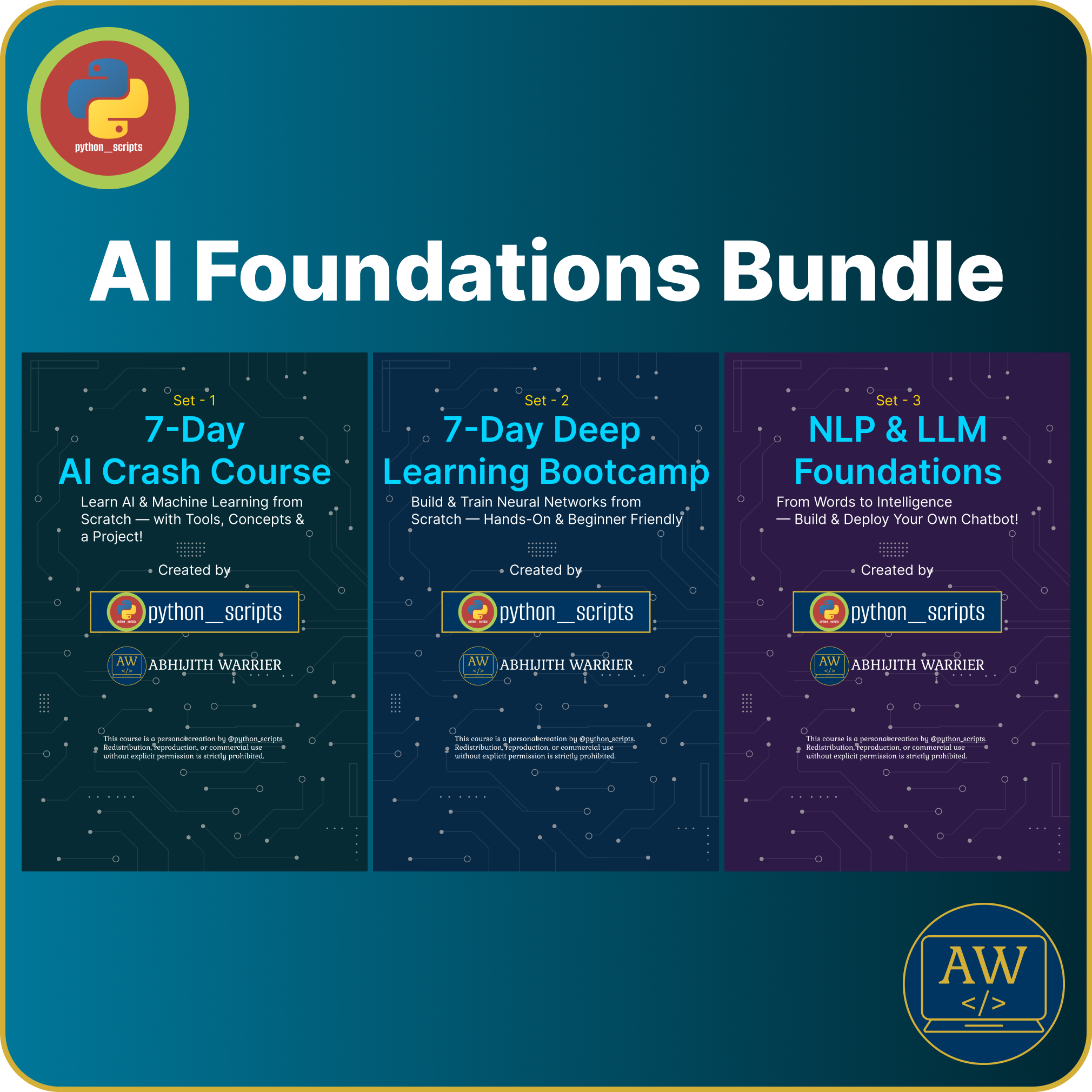
AI Foundations Bundle — From AI Basics to Deep Learning & NLP
Learn AI the right way — from core concepts to deep learning and language models, all in one structured bundle.
Ideal for beginners and developers who want a complete AI roadmap without confusion.
No comments yet. Be the first to comment!