Architecture Realities: The Hidden Cost of Over-Engineering
Introduction:
Over-engineering rarely starts as a mistake and often feels like a responsible decision at the time. Teams try to anticipate future scale, flexibility, and edge cases while designing systems.
However, building for possibilities that may never happen introduces complexity early. This complexity creates costs that are not immediately visible but grow over time.
Complexity Arrives Before It Is Needed:
Over-engineered systems are designed for scenarios that do not yet exist. Features, abstractions, and architectural layers are added in anticipation of future requirements.
This results in systems that are harder to understand and maintain from the beginning. Teams spend more time navigating the system than solving actual problems.
Development Slows Down Unnecessarily:
Additional layers and abstractions increase the effort required to make even small changes. What could be a simple update becomes a multi-step process involving several components.
This slows down iteration and reduces the ability to respond quickly to changing requirements. Over time, productivity declines even if the system appears well-designed.
Debugging Becomes More Difficult:
Complex systems introduce more points of failure and interaction. When something breaks, engineers must trace issues across multiple layers and components.
This increases the time required to identify root causes. Even simple issues can take longer to resolve because the system is harder to reason about.
Flexibility Comes With Trade-offs:
Over-engineering often aims to make systems more flexible and extensible. While flexibility can be valuable, it also introduces additional decision points and complexity.
In many cases, the added flexibility is never used. The system carries the cost of complexity without realizing the intended benefits.
Premature Optimization Increases Cost:
Teams often optimize for scale or performance before it becomes necessary. This leads to decisions that add complexity without immediate value.
Optimizations that are not required early can make the system harder to evolve. It is often more efficient to optimize when real constraints appear.
Maintenance Becomes Expensive Over Time:
Every additional component, abstraction, or configuration adds to the maintenance burden. Systems require ongoing updates, bug fixes, and adjustments as requirements change.
Over-engineered systems accumulate technical overhead that grows with time. This increases the long-term cost of ownership.
Team Understanding Decreases:
As complexity increases, fewer engineers fully understand the system. Knowledge becomes fragmented across the team, and onboarding new members takes longer.
This reduces the ability of the team to move quickly and confidently. Systems become dependent on a small number of individuals.
Real Requirements Get Delayed:
Time spent building for hypothetical scenarios delays solving real problems. Teams invest effort in features or structures that may never be used.
This shifts focus away from delivering actual value. The system becomes sophisticated but less useful.
Simplicity Scales Better Than Complexity:
Simple systems are easier to understand, modify, and extend. They allow teams to adapt quickly as requirements evolve.
Complex systems, on the other hand, resist change. Simplicity provides flexibility without the overhead of unnecessary abstraction.
Conclusion:
The cost of over-engineering is not immediately visible, but it compounds over time. It slows development, increases maintenance effort, and reduces clarity.
Effective engineering is not about building for every possible future. It is about solving current problems well and evolving systems as real needs emerge.
Comments
Add Your Comment
Related Posts
Architecture Realities: When Event-Driven Architectures Backfire
0 20
Architecture Realities: Why Simpler Architectures Often Win at Scale
0 52
Architecture Realities: Designing Systems for Teams, Not Just Traffic
0 117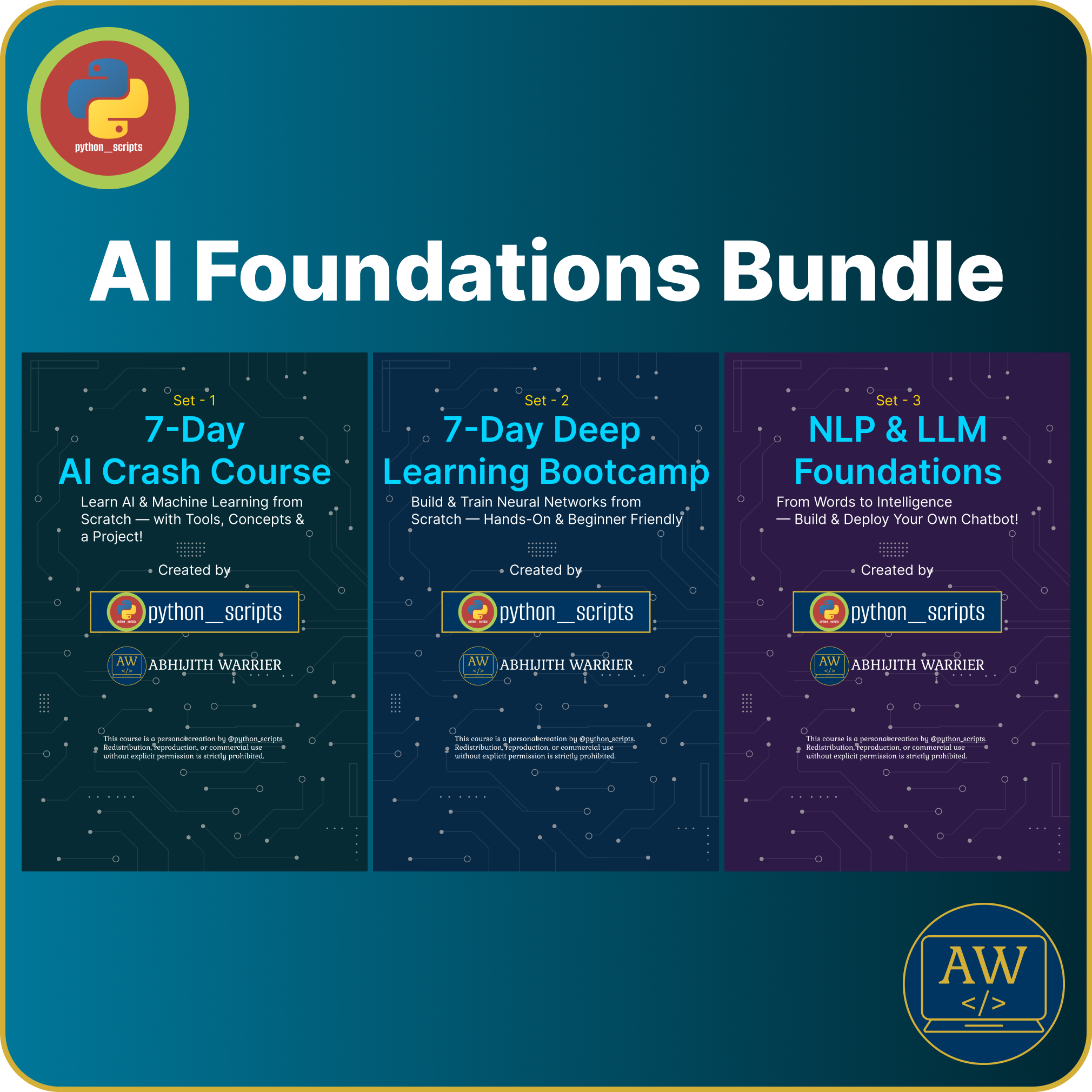
AI Foundations Bundle — From AI Basics to Deep Learning & NLP
Learn AI the right way — from core concepts to deep learning and language models, all in one structured bundle.
Ideal for beginners and developers who want a complete AI roadmap without confusion.
No comments yet. Be the first to comment!