Resilience Engineering: Designing Systems That Expect Failure
Introduction:
Many systems are designed with the assumption that components will behave correctly most of the time. Under normal conditions, this approach may appear sufficient and efficient.
However, real-world systems operate in unpredictable environments where failures are inevitable. Networks become unstable, dependencies slow down, services crash, and unexpected traffic spikes occur.
Resilient systems are not designed around avoiding failure entirely. They are designed with the expectation that failure will happen sooner or later.
Failure Is a Normal System Behaviour:
In distributed environments, failures are not exceptional events but part of regular system operation. Hardware issues, software bugs, deployment mistakes, and dependency outages are unavoidable at scale.
Treating failures as rare leads to fragile systems that collapse under stress. Systems become more reliable when engineers assume that components can fail at any moment.
This mindset changes how architecture decisions are made from the beginning.
Single Points of Failure Create Fragility:
Systems become vulnerable when critical functionality depends on a single component. A database instance, service, or infrastructure dependency can become a bottleneck or failure source.
When that component fails, the impact spreads quickly across the system. Even highly available architectures can become fragile if hidden single points of failure exist.
Identifying and reducing these dependencies is essential for resilience.
Redundancy Improves Reliability:
Redundancy ensures that systems can continue functioning even when parts of the infrastructure fail. Multiple instances, replicated databases, and failover mechanisms reduce the impact of outages.
However, redundancy alone is not enough if failover behaviour is not tested properly. Systems may appear resilient on paper but fail unexpectedly during real incidents.
Resilience depends on both redundancy and operational readiness.
Graceful Degradation Matters More Than Perfection:
Resilient systems are designed to degrade gracefully instead of failing completely. When dependencies fail, systems should continue providing partial functionality wherever possible.
For example, a recommendation service failing should not prevent users from accessing core features. Limiting the blast radius of failure improves overall user experience.
Graceful degradation reduces the impact of incidents while recovery is in progress.
Retries Can Create New Problems:
Retries are commonly used to recover from temporary failures. While useful, uncontrolled retries can overload already struggling systems and amplify incidents.
Retry storms are a common cause of cascading failures in distributed systems. Without rate limiting or backoff strategies, recovery becomes harder instead of easier.
Failure-handling mechanisms must be designed carefully.
Timeouts and Circuit Breakers Prevent Cascading Failures:
Slow dependencies can consume threads, connections, and resources across the system. Without protection mechanisms, small issues spread rapidly.
Timeouts ensure that systems stop waiting indefinitely for failing dependencies. Circuit breakers temporarily block failing requests and allow systems to recover.
These mechanisms help contain failures before they propagate.
Observability Is Critical During Failure:
Failures are difficult to manage without visibility into system behaviour. Logs, metrics, tracing, and alerts provide the information needed to understand what is happening.
Without observability, teams operate blindly during incidents. Root causes become harder to identify and recovery takes longer.
Designing for resilience requires designing for visibility as well.
Testing Failure Is Part of System Design:
Many systems are tested only under normal operating conditions. However, resilience can only be validated by testing how systems behave during failure scenarios.
Chaos engineering, failover testing, and load testing help identify weaknesses before real incidents occur. These tests expose hidden assumptions and operational gaps.
Systems that are never tested under failure conditions are often less resilient than expected.
Human Processes Affect Resilience Too:
Resilience is not only about infrastructure and architecture. Team communication, incident response procedures, and operational readiness also influence system reliability.
Even well-designed systems can fail badly if teams are unprepared during incidents. Clear ownership and effective coordination reduce recovery time.
Operational maturity is a major part of resilience engineering.
Resilience Requires Continuous Improvement:
System resilience is not achieved once and permanently maintained. As systems evolve, new dependencies, traffic patterns, and failure modes emerge.
Teams must continuously review incidents, improve safeguards, and refine architecture decisions. Resilience is an ongoing engineering practice rather than a final state.
The most reliable systems are built by teams that continuously learn from failure.
Conclusion:
Designing systems that expect failure leads to more reliable and sustainable architectures. Instead of assuming perfect conditions, resilient systems are built to handle instability gracefully.
Failures will always occur in complex systems. The goal is not to eliminate them entirely, but to reduce their impact and recover effectively when they happen.
Enjoyed this post?
Stay in the loop
New posts + weekly digest, straight to your inbox.
Create a free account
- Save posts to your vault
- Like posts & build history
- New-post alerts
Comments
Add Your Comment
Related Posts
Resilience Engineering: Why Reliability Engineering Is More About Design Than Tools
0 105
Resilience Engineering: Why Redundancy Alone Doesn't Guarantee Resilience
0 131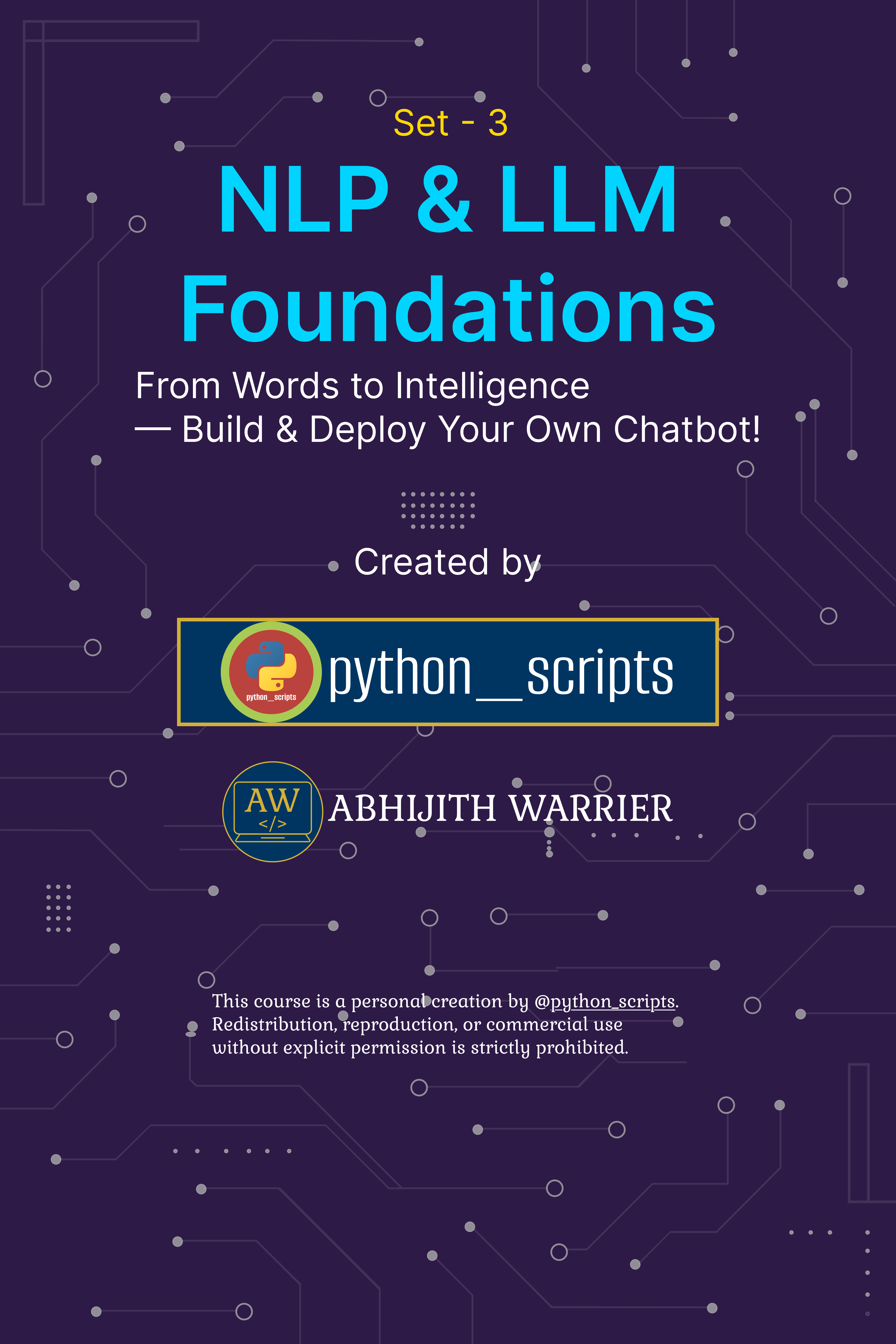
NLP & LLM Foundations — From Words to Intelligence
Learn how language AI works — tokenize text, build embeddings, use transformers, and deploy your own NLP models.
Ideal for developers and creators stepping into chatbots, LLMs, and language-driven AI systems.
No comments yet. Be the first to comment!