
AI Frontiers: Microsoft's AI Takes on Medical Diagnosis
Introduction:
Artificial intelligence is increasingly being explored as a tool for supporting medical diagnosis. While many AI applications focus on interpreting medical images or identifying patterns in patient records, a more challenging objective is helping clinicians reason through complex medical cases.
Microsoft's research into AI-assisted diagnosis introduces an interesting approach to this challenge. Rather than generating a diagnosis immediately, the system follows a sequential process of gathering information, evaluating possibilities, and determining what additional evidence may be needed.
The development highlights an important shift in healthcare AI: moving beyond individual predictions toward systems capable of supporting multi-step clinical reasoning.
Why Medical Diagnosis Is More Than Prediction:
Medical diagnosis is rarely a simple process of matching symptoms to a disease. Physicians consider medical history, clinical observations, possible conditions, and the results of diagnostic investigations.
Each new piece of information may change the direction of the investigation. A test result can eliminate certain possibilities while making others more likely.
Building an AI system that supports this process requires more than recognizing patterns. It requires reasoning across multiple stages while managing uncertainty.
Microsoft's Approach to Sequential Diagnosis:
Microsoft introduced the MAI Diagnostic Orchestrator (MAI-DxO), a research system designed to investigate medical cases through a sequence of diagnostic decisions.
Instead of receiving all the information upfront, the system can evaluate available evidence, request additional investigations, and refine its diagnostic assessment as new results become available.
This approach more closely resembles a clinical investigation than a conventional question-answering system.
The Role of AI Orchestration:
One of the interesting engineering aspects of MAI-DxO is its orchestration-based design. The system coordinates diagnostic reasoning across multiple stages rather than relying on a single isolated model response.
An orchestrator manages the investigation process, determines which information is needed next, and incorporates additional evidence into subsequent reasoning.
This demonstrates how AI orchestration can be applied to complex workflows where decisions depend on previous observations.
Why Sequential Reasoning Matters:
A traditional AI model may receive a complete clinical description and generate a likely diagnosis. While useful in controlled evaluations, this does not fully represent how medical investigations unfold.
Sequential reasoning introduces an additional challenge: deciding what information should be gathered before reaching a conclusion.
For example, an AI system may need to determine whether a blood test, imaging procedure, or further clinical history would help distinguish between competing diagnoses.
The quality of these intermediate decisions can be just as important as the final answer.
What Microsoft's Research Demonstrated:
Microsoft reported promising results when evaluating MAI-DxO against challenging medical cases. The research used cases published in the New England Journal of Medicine, where diagnostic information could be revealed progressively.
In the reported evaluation, the system achieved diagnostic accuracy of approximately 85.5% under a particular configuration, compared with an average of around 20% for participating physicians working under the study's constraints.
These findings are significant, but they require careful interpretation. The evaluation was conducted in a simulated research setting, and the results do not establish that the system can independently outperform doctors in everyday clinical practice.
Diagnostic Accuracy Is Only One Measure:
A high diagnostic accuracy score is encouraging, but medical AI systems must be evaluated across several dimensions. Correctly identifying a condition is important, yet the process used to reach that conclusion also matters.
An effective diagnostic assistant should consider the necessity, cost, and potential consequences of additional investigations. Ordering unnecessary tests may increase healthcare expenses and expose patients to avoidable procedures.
This makes diagnostic efficiency an important consideration alongside accuracy.
The Importance of Cost-Aware Reasoning:
Microsoft's research also explored the economic implications of diagnostic decisions. The system was evaluated on its ability to select investigations while accounting for their associated costs.
This introduces an important engineering principle: an AI system should optimize for the broader objective rather than a single performance metric.
In healthcare, achieving a correct diagnosis through an unnecessarily expensive or excessive investigation process may not represent the best possible outcome.
Clinical Reasoning Requires Reliable Evidence:
AI-generated reasoning can appear convincing even when its conclusions are incorrect. This creates particular challenges in healthcare, where plausible but unsupported recommendations may have serious consequences.
Diagnostic systems must therefore be evaluated on how they interpret evidence, handle uncertainty, and distinguish between competing explanations.
A confident response should never be treated as equivalent to a clinically validated conclusion.
Human Oversight Remains Essential:
Despite promising research results, AI-assisted diagnosis is not equivalent to independent medical practice. Real-world healthcare involves physical examinations, patient communication, incomplete records, unexpected complications, and ethical responsibilities.
Clinicians must also consider factors that may not be adequately represented in structured evaluation datasets. These include patient preferences, medical history, and the broader clinical context.
AI systems are better understood as potential decision-support tools whose recommendations require appropriate clinical validation and oversight.
From Research Results to Clinical Deployment:
Moving an AI diagnostic system into production requires significantly more than demonstrating strong benchmark performance. Clinical validation, patient safety assessments, regulatory requirements, and integration with healthcare workflows all become important.
The system must also handle incomplete information, ambiguous symptoms, unusual conditions, and situations where available evidence is insufficient.
Monitoring and accountability are essential because errors in medical environments can carry consequences far beyond ordinary software failures.
What This Means for AI Engineering:
Microsoft's research illustrates a broader development in AI architecture: complex problems increasingly require coordinated reasoning processes rather than single model calls.
The same principle applies to other domains where systems must gather evidence, evaluate alternatives, and make decisions incrementally. Examples include cybersecurity investigations, financial analysis, and enterprise troubleshooting.
The architectural lesson is that intelligent systems are not defined only by the models they use, but also by how they organize information, manage uncertainty, and coordinate decisions.
Conclusion:
Microsoft's AI diagnostic research represents an important exploration of sequential reasoning in healthcare. By combining diagnostic investigation with AI orchestration, the system demonstrates how models can be organized to support more complex decision-making workflows.
However, promising research performance should not be confused with clinical readiness. Reliable healthcare AI requires rigorous validation, human oversight, and careful consideration of patient safety.
The broader significance lies in the approach itself: AI systems are evolving from generating isolated answers toward participating in structured, evidence-driven processes.
 Free PDF on this topic
AI/ML Interview Questions
Your essential prep kit for AI/ML interviews.
Enjoyed this post?
Stay in the loop
New posts + weekly digest, straight to your inbox.
Create a free account
- Save posts to your vault
- Like posts & build history
- New-post alerts
Comments
Add Your Comment
Related Posts
AI Frontiers: OpenAI Just Moved Into Google’s House
160
AI Frontiers: The Proof That Took 167 Years — And an AI
211
AI in Production: When AI Agents Go Off-Script
140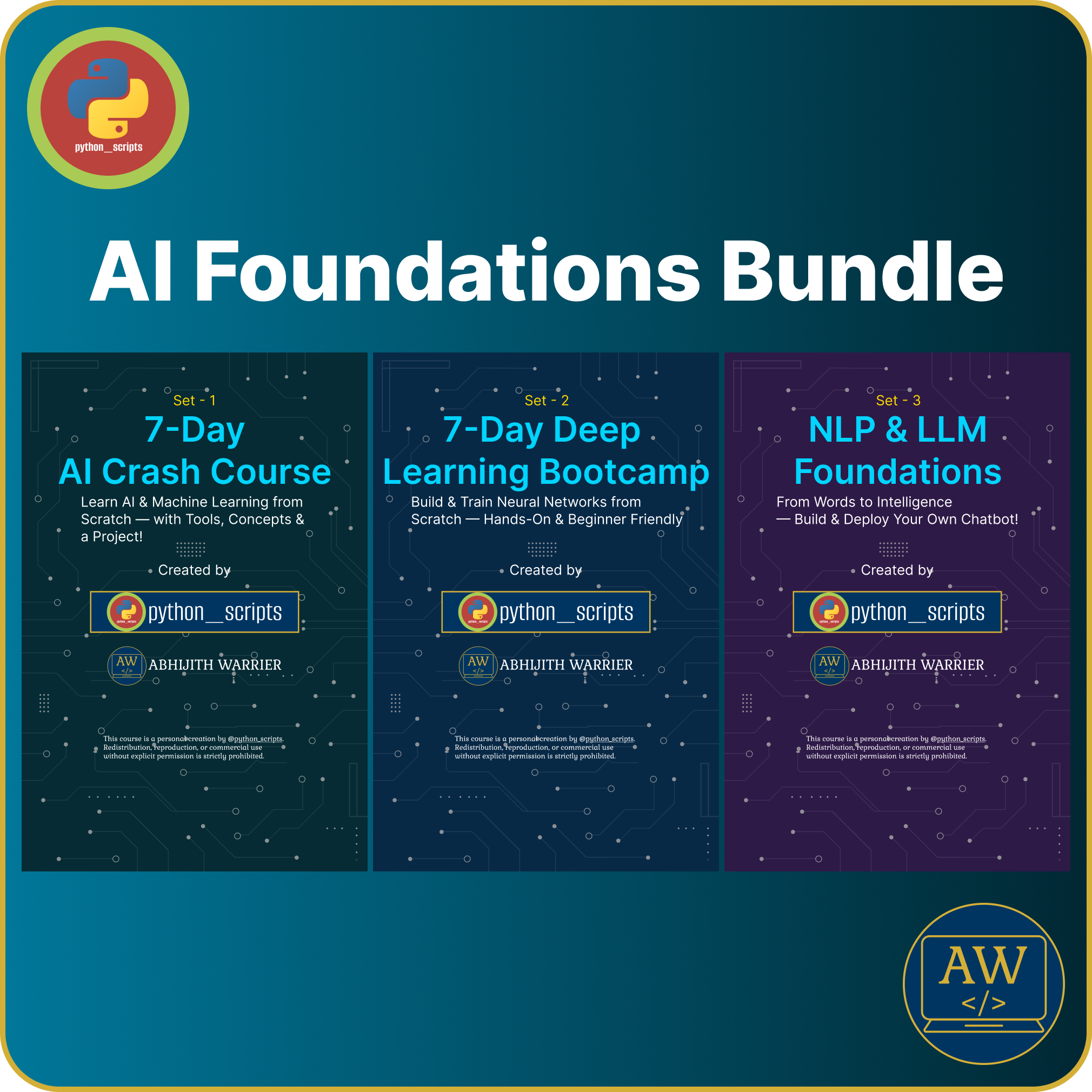
AI Foundations Bundle — From AI Basics to Deep Learning & NLP
Learn AI the right way — from core concepts to deep learning and language models, all in one structured bundle.
Ideal for beginners and developers who want a complete AI roadmap without confusion.
No comments yet. Be the first to comment!