
Career Realities: Microsoft Just Offered a Quarter of Its Workforce a Way Out
Microsoft’s Voluntary Exit Offer, announced on 26 October, has been confirmed as reaching roughly 60,000 employees— about a quarter of a 223,000-person company.
It covers participating teams in the United States, Canada, the United Kingdom and India, and runs from the bottom of the organisation up to level 70, including general managers and some vice presidents. Corporate vice presidents are excluded. There is no age or tenure requirement, and performance is explicitly not a factor. Eligible employees received an email on Monday with their individual offer, and they have until the first week of December to decide.
Chief People Officer Amy Coleman’s note says the offer gives employees already considering a future outside the company a way to transition now with support. It also contains the line worth holding onto: “The Voluntary Exit Offer is new for us.”
What Is Actually on Offer
The package matches Microsoft’s standard severance rather than exceeding it: base pay calculated on tenure and level, continued stock vesting, healthcare coverage for a fixed period, and career transition services.
One omission is informative. The spring Voluntary Retirement Program included extended healthcare coverage. This one does not. Microsoft is offering the exit at its ordinary price, not a premium — which sets up the question of how many acceptances it actually expects.
Who Opted In, and Who Did Not
This is the most revealing detail in the announcement, and the one being least discussed.
Participation is not company-wide. Individual business leaders decide whether their organisation takes part. Per Bloomberg’s reporting, Xbox, Windows, Copilot and Finance are participating. The sales organisation, data centre staff, some engineering groups and some corporate functions are not.
Read that list again. Copilot — the AI product organisation — is in the pool. Data centres are out.
Microsoft is spending tens of billions of dollars building AI infrastructure while facing Wall Street pressure to hold operating expenses down. Capital expenditure buys buildings and silicon. Operating expenditure pays people. When those two lines pull in opposite directions, the resolution looks exactly like this.
The data centres are excluded. The people building for them are not.
Not a Replacement for Layoffs
A Microsoft spokesperson was specific on this point: the offer does not mean the company needs fewer employees, it is one of several ways Microsoft is adjusting to business needs, and it is not a replacement for layoffs.
That last clause deserves attention rather than cynicism. Read plainly, it says the voluntary route and the involuntary route are separate instruments, and using one does not retire the other.
It is also the reason the voluntary instrument exists at all. A layoff requires selection — someone draws up a list, defends it, and owns it, triggering notification requirements, consultation periods and internal records that can later be litigated. A voluntary offer sidesteps all of it. Everyone eligible got the same email, and whoever accepts chose to.
A layoff requires someone to own a list. A voluntary offer requires nobody to own anything.
Microsoft has used the other instrument recently and repeatedly: roughly 4,800 jobs cut in July, several hundred more in September, over 15,000 across 2025. Headcount stood at 223,000 at the end of June, down from 228,000 a year earlier. Nothing about this offer suggests that record has closed.
What Spring Already Told Microsoft
Microsoft ran this experiment once this year, and the numbers are public.
The Voluntary Retirement Program went to roughly 8,750 eligible employees in the United States. About 30% accepted. Microsoft booked a $900 million charge for it.
The company expects a considerably lower acceptance rate this time, and that tracks — the spring programme targeted people already near retirement, where the decision is simple. A level 67 engineer with a mortgage and eight years of unvested stock is a different calculation entirely.
That expectation is the quiet admission in the whole exercise. If you offer 60,000 people a standard-severance exit and expect few to take it, the programme is not primarily a headcount plan. It is an option written for the people who were already leaving, and a signal to everyone else about which direction their organisation is moving. Microsoft reports quarterly earnings on Wednesday, which may put a cost figure on it.
What It Signals Beyond Microsoft
Two voluntary programmes in one year at one company, the second reaching a quarter of the workforce, is a mechanism becoming standard rather than exceptional. It is legally cheaper than a layoff, quieter in the press, and repeatable. Expect more of them, at more companies, described in the same measured language about adapting to changing needs.
The practical implication is unglamorous. What turns an exit offer into an opportunity rather than a crisis is being employable on six weeks’ notice: a current read on your market rate, relationships outside your employer, and work you can point at. None of that can be assembled inside a decision window.
Microsoft says the offer is for employees already considering a future outside the company. The uncomfortable corollary is that it rewards the people who were thinking about this before the email arrived.
 Free PDF on this topic
AI/ML Interview Questions
Your essential prep kit for AI/ML interviews.
Enjoyed this post?
Stay in the loop
New posts + weekly digest, straight to your inbox.
Create a free account
- Save posts to your vault
- Like posts & build history
- New-post alerts
Comments
Add Your Comment
Related Posts
Career Realities: Why Debugging Is the Core Skill of Senior Engineers
150
Career Realities: The Truth About Becoming a Staff Engineer
142
Career Realities: Choosing Boring Technology — A Senior Engineer’s Advantage
160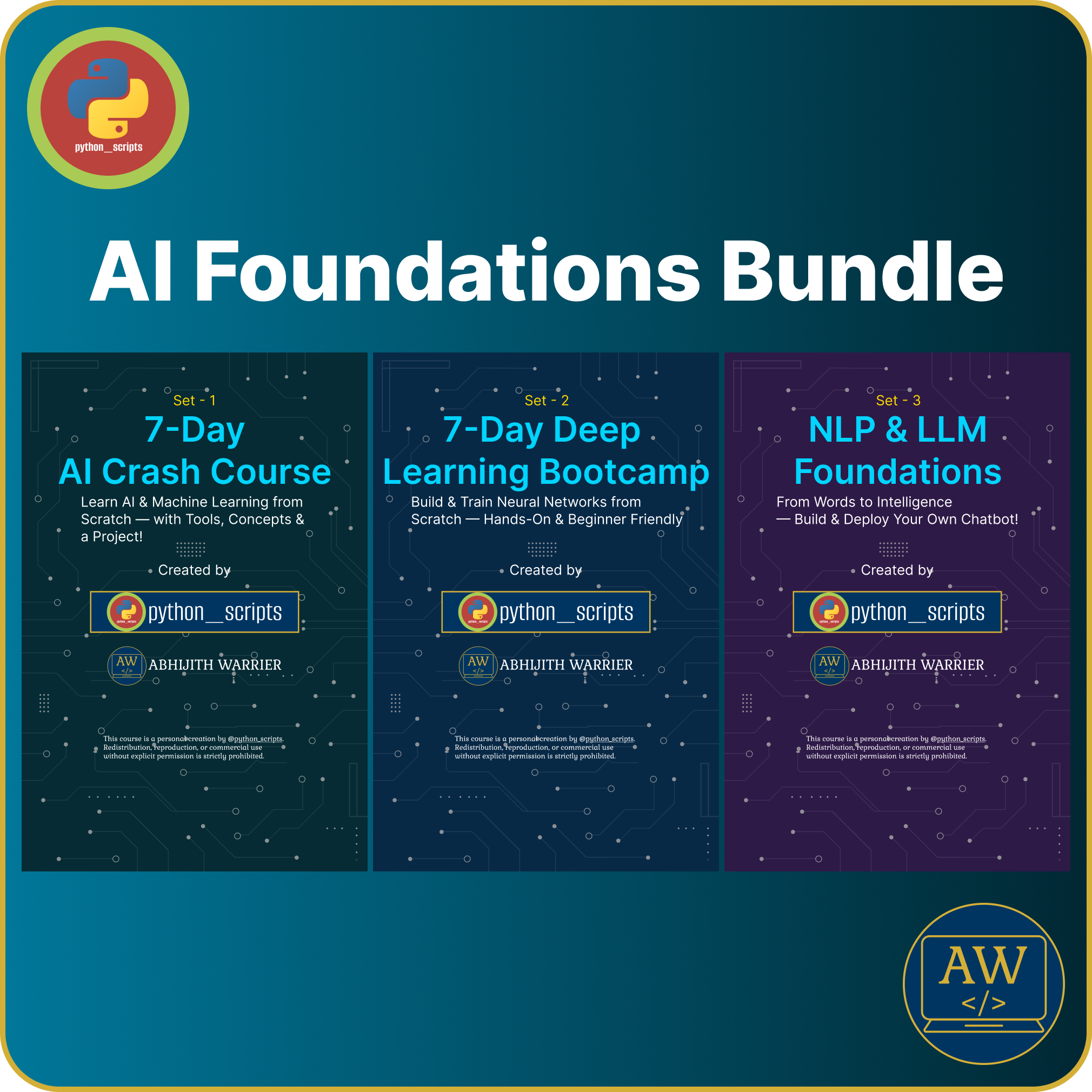
AI Foundations Bundle — From AI Basics to Deep Learning & NLP
Learn AI the right way — from core concepts to deep learning and language models, all in one structured bundle.
Ideal for beginners and developers who want a complete AI roadmap without confusion.
No comments yet. Be the first to comment!