
The Rethought — Cloud Capacity Is Sold Out Through 2027
Buried under the cloud earnings numbers this week was one sentence that should have landed harder than it did.
Capacity is largely sold out through 2027.
AWS, Azure and Google Cloud reported over $100 billion in combined quarterly revenue. Amazon raised capex guidance toward $220 billion. And then they said they can’t sell you more compute — and the share prices went up.
Not despite the constraint. Because of it. A supplier who can’t meet demand sets the price.
The thing you can’t engineer around
Software people picture a data centre as a room full of servers. The servers are the cheap part and the fast part.
What actually gates a facility is a grid connection, and those queues run in years. Behind them sit transformers with multi-year order books and turbine capacity sold forward. A data centre is a power purchase agreement with a building attached.
Here’s why that’s uncomfortable for us specifically. Every constraint our profession trains on yields to cleverness. Latency you cache. Cost you profile. Scale you shard. The entire discipline runs on the belief that a hard limit is just a problem you haven’t thought about properly yet.
This one doesn’t work that way. There is no clever path to the front of an interconnection queue. You can shard around scale. You queue for megawatts.
Why it lands on your desk
Three things change, and you don’t have to work at a hyperscaler for any of them.
Efficiency stops being hygiene and becomes strategy. For fifteen years, optimising a workload had a modest payoff because adding instances was cheap and instant. In a sold-out market, the compute you free up is compute you can actually use.
Region selection stops being about latency and starts being about who has capacity — information that’s now commercially sensitive in a way it never used to be.
And “we’ll scale up when we need to” quietly assumes someone built a power station four years ago. If your 2028 roadmap depends on elastic compute, it’s worth finding out whether your provider agrees.
What I’m actually thinking
The detail I keep returning to is Microsoft offering voluntary exits to around 60,000 people in the same quarter it committed tens of billions to infrastructure. Xbox, Windows and Copilot opted into that offer. Data centre staff didn’t.
Capex buys buildings. Opex pays people. When those two compete, the one with a four-year lead time wins — because you can rehire an engineer next year and you can’t conjure a substation.
We spent a decade treating infrastructure as solved and abstracted away. It was never solved. It was abundant, which felt identical right up until it stopped.
So the question worth sitting with isn’t whether AI is overbuilt. It’s narrower than that: if your platform told you next quarter that you can have exactly the compute you have today and not one instance more, what would you change?
And why aren’t you doing that already?
 Most downloaded free PDF
50 Machine Learning Algorithms Cheatsheet
Blueprints of Intelligence — 50 ML Algorithms decoded
Enjoyed this post?
Stay in the loop
New posts + weekly digest, straight to your inbox.
Create a free account
- Save posts to your vault
- Like posts & build history
- New-post alerts
Comments
Add Your Comment
Related Posts
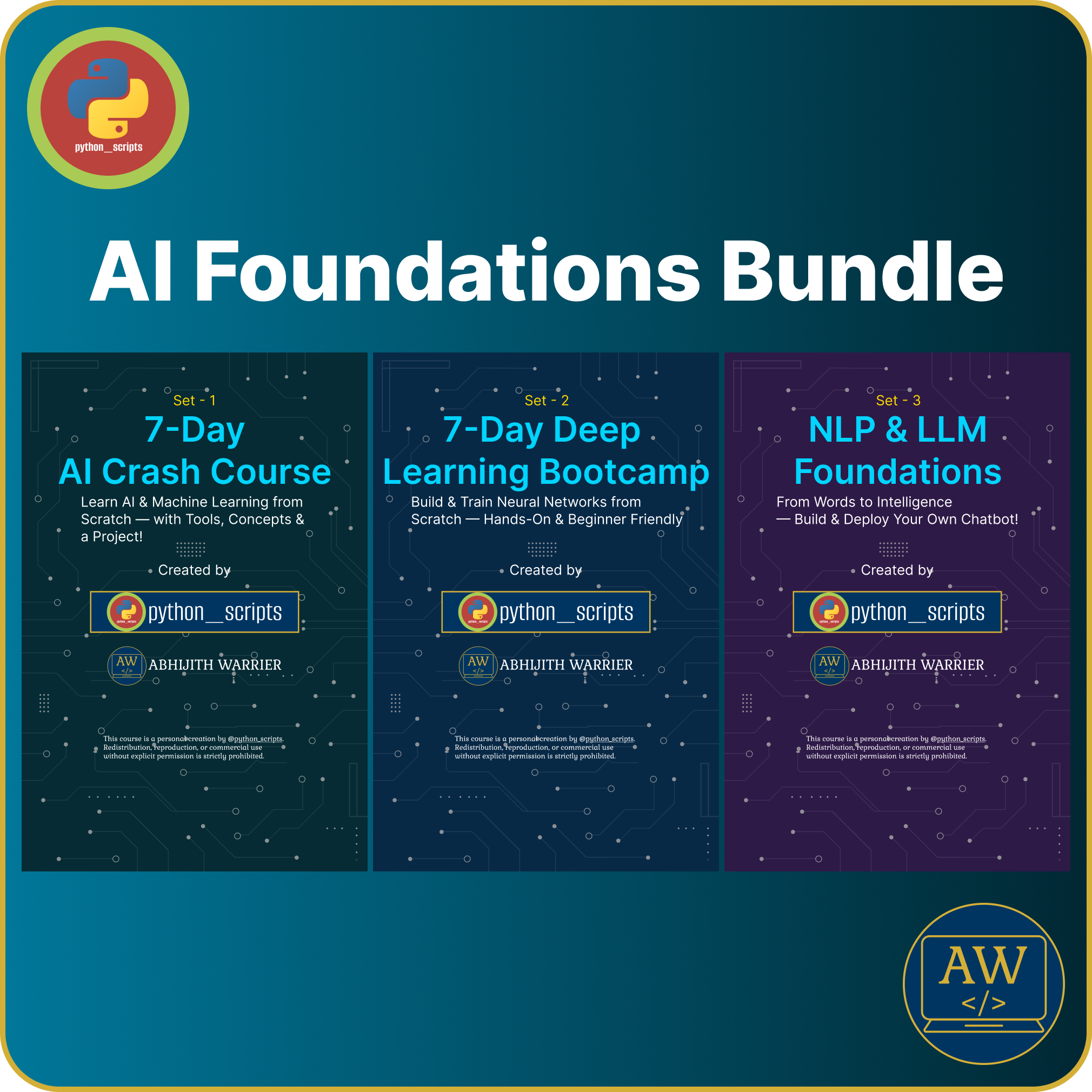
AI Foundations Bundle — From AI Basics to Deep Learning & NLP
Learn AI the right way — from core concepts to deep learning and language models, all in one structured bundle.
Ideal for beginners and developers who want a complete AI roadmap without confusion.
No comments yet. Be the first to comment!